
President Ferdinand Marcos Jr. inaugurated the ₱1.49-billion Alfonso Lista Pump Irrigation System in Ifugao on Monday, October 26, ending more than 14 years of construction and promising steady water to 1,315 farmers who until now depended on rain.
The system draws water from the Magat Reservoir and will irrigate 2,300 hectares of farmland across four barangays in eastern Ifugao, near the boundary with Isabela. According to Rappler, construction began on May 22, 2012, and was completed on October 7, 2026.
Why the project took 14 years
The original completion target was 2017. A source at the National Irrigation Administration, speaking to Rappler, said limited annual funding releases pushed the schedule far beyond that date.
The project also weathered typhoon damage, right-of-way disputes, delays in transporting explosives for tunnel construction, and a long approval process for its electrical connection. Construction was suspended in 2019 pending clearance from the National Commission on Indigenous Peoples. The NIA source said that suspension and the rise in material costs had minimal effect on the overall delay, pinning most of it on the funding releases.
Fourteen years is a long time to wait for water. Farmers in Sto. Domingo, Namnama, Namillangan, and Calupaan spent those years watching their rice fields depend on the sky.
What the new system will deliver
Marcos said the facility expands irrigation coverage from 275 hectares to 2,300 hectares, and could raise palay production from 900 metric tons to 26,000 metric tons once fully utilized. GuruPress Cordillera and The Daily Chronicle both reported the President's projection that farmers' earnings could climb from ₱16 million to ₱159 million, though the period covered and whether those figures are gross or net were not specified.
Alam po naman natin na ang pinakamahalaga sa pagsasaka ay ang patubig, Marcos said. The most important element in farming is irrigation, and finding a way to water non-irrigated areas changes everything.
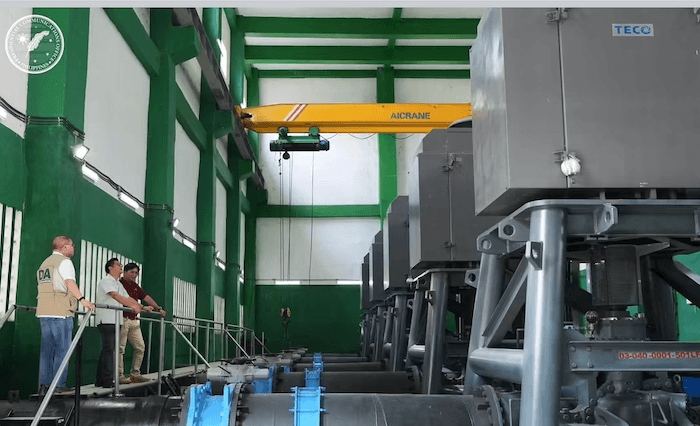
The facilities include five pumping units, an electrical substation, a water intake facility, a transbasin tunnel, nearly 32 kilometers of main and lateral canals, and more than 14 kilometers of access and service roads. The NIA will keep the system under its own operation and maintenance.
Farmers' fear of dry fields fades
Rodolfo Manglallan, president of the Sto. Domingo Irrigators' Association, said the change is personal. Farmers once relied purely on rainfall, leaving their palay exposed to prolonged dry spells.
Of course, our farming system will change, and our fear that our rice farms will dry up is disappearing, he told the Presidential News Desk.
Timed against El Niño
The inauguration comes as the government braces for potentially severe El Niño conditions that could bring dry spells and threaten harvests nationwide. NIA Administrator Eduardo Guillen said reliable irrigation gives farmers a real chance to raise output and improve their livelihoods, and he urged beneficiaries to conserve water and help maintain the new facilities.
Guillen also noted the timing: the project opened a day before the 44th anniversary of Magat Dam's inauguration on October 27, 1982, under President Ferdinand Marcos Sr. More than four decades on, the reservoir still feeds Cordillera agriculture, and the Alfonso Lista project extends its reach to new farming communities.
Ifugao asks for more
Ifugao Governor Jerry Dalipog welcomed the project but used the President's visit to press for more national support. He requested improvements to farm-to-market roads so farmers can move their produce and reach schools, clinics, and markets. He also sought funding to finish the Ifugao Sports Complex and proposed a commemorative garden honoring Marcos Sr. in Lamut. No funding commitments were announced.
Marcos unveiled the project marker, inspected the control rooms and pump house, and viewed produce displayed by farmer-beneficiaries.
NIA records show Ifugao has developed 19,997 hectares, or 77.42 percent of its estimated irrigable land, as of September 30. Another 5,833 hectares remain. The new system should let farmers cultivate formerly rain-dependent fields more consistently and potentially add cropping cycles.
The ₱1.49 billion is spent and the pumps are running. What happens next depends on water delivery, steady maintenance, and the harvests of the 1,315 farmers the project was built to serve.
Frequently asked questions
What is the Alfonso Lista Pump Irrigation System?
It is a ₱1.49-billion irrigation facility in Alfonso Lista, Ifugao, that pumps water from the Magat Reservoir to irrigate 2,300 hectares of farmland for 1,315 farmers.
How long did the Ifugao irrigation project take to build?
Construction began on May 22, 2012, and finished on October 7, 2026, more than 14 years, delayed mainly by limited annual funding, typhoon damage, right-of-way issues, and permitting problems.
How much rice production is expected to increase?
President Marcos said palay production in the service area could rise from 900 metric tons to 26,000 metric tons once the system is fully utilized.