
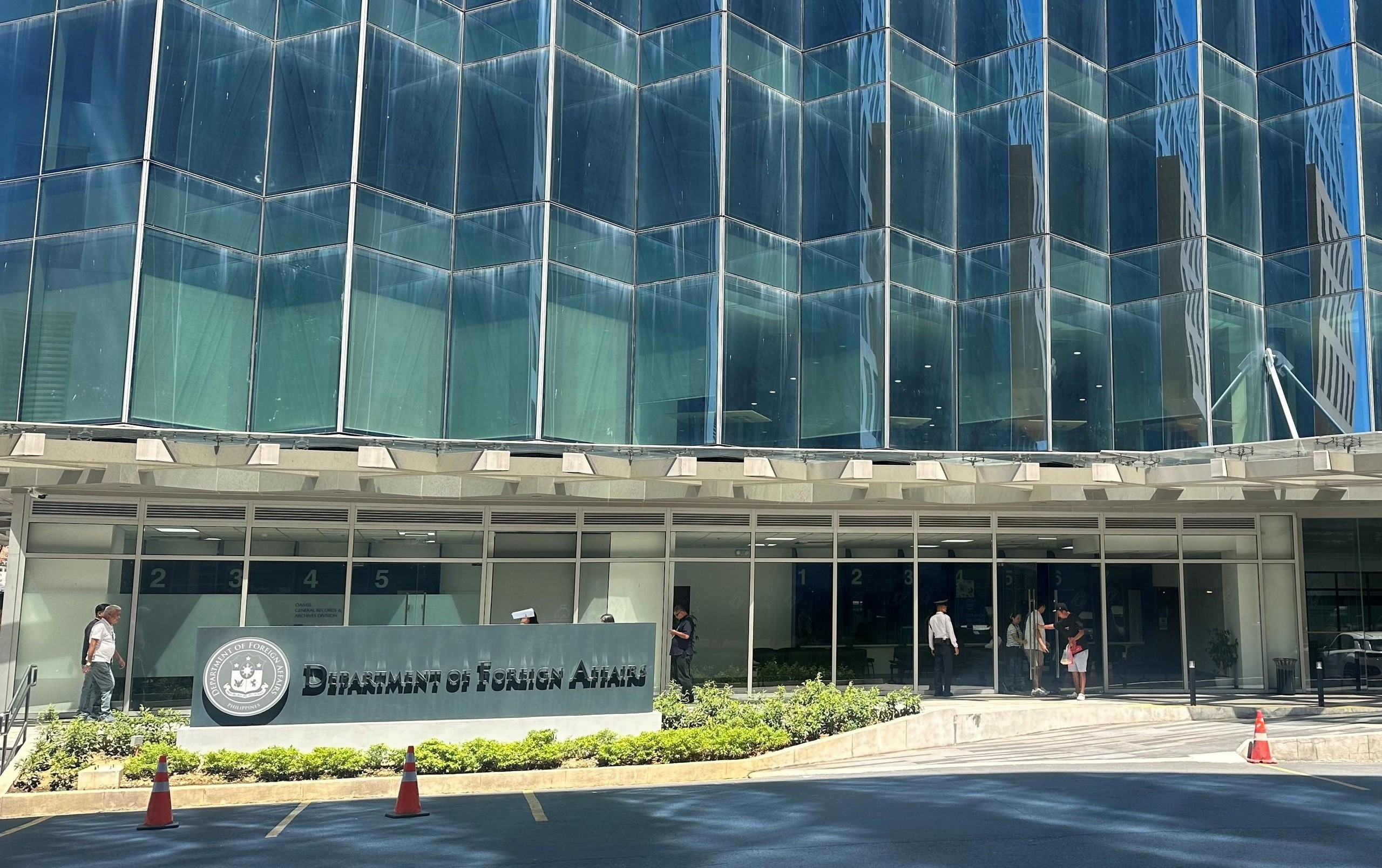
The Department of Foreign Affairs on Sunday rejected Ombudsman Jesus Crispin Remulla's claims about its visa and passport services, calling his statements false and irresponsible. The dispute centers on remarks Remulla made on his DZRH radio program on Saturday.
According to GMA Network, the DFA issued a detailed statement defending its legal authority over visas and passports while denying accusations that it profits from issuing travel documents.
DFA says visa-free entry for Chinese nationals is tightly limited
Remulla claimed during his program that about 1% of Chinese tourists who entered the Philippines under a visa-free arrangement have overstayed. The DFA responded by clarifying the scope of the policy.
“With regard to the 14-day visa-free entry arrangement for Chinese nationals, DFA Foreign Service Circular No. 2026-005 was issued pursuant to a Presidential directive to facilitate trade, investments, tourism, and people-to-people exchanges between the Philippines and China,” the agency said.
The department explained that the arrangement applies only to tourism or business travel, for a maximum of 14 days, and is non-extendible and non-convertible to other visa categories. It added that any misuse of visa-free privileges is immediately referred to Philippine law enforcement agencies for investigation, and does not indicate illegal implementation on its part.
Agency asserts statutory authority over visa issuance
Remulla also argued that visa matters fall exclusively under the Department of Justice's immigration authorities. The DFA strongly disagreed, citing Section 21(3) of Executive Order No. 292, the Administrative Code of 1987, which expressly recognizes visa issuance as a statutory function of Philippine consular offices.
“This mandate is further recognized under Articles 3, 5(d), and 70 of the Vienna Convention on Consular Relations, which establish visa issuance as a consular function that may be exercised by diplomatic missions,” the agency said.
It maintained that, like any sovereign nation, the Philippines holds the authority to set its own visa requirements and procedures, independent of delegated authority from the DOJ.
DFA rejects outsourcing proposal for visa processing
The Ombudsman renewed his call to outsource visa processing to third-party providers, claiming the DFA was making money off visa issuance through travel agencies. The department firmly rejected the idea.
“While the provider may provide administrative support in receiving and facilitating visa applications, the DFA reiterates that the authority to assess, approve, or deny Philippine visas is a sovereign governmental function that cannot be transferred to a private entity through an outsourcing arrangement,” the agency said.
The department emphasized that it has no tolerance for corruption and has previously rejected similar proposals from Remulla.
Agency denies issuing fake passports or profiting from fees
Remulla accused the DFA of issuing “fake” passports and profiting from its passport and visa operations. The department condemned the accusations as false.
“The DFA does not issue 'fake' passports nor does it impose documentary requirements to make applications deliberately difficult,” the agency said.
“The DFA firmly rejects any suggestion that the Department treats passports and visas as commodities for sale,” it added.
The department stressed that passport issuance strictly follows Republic Act No. 11983, the New Passport Law, and that all passport and visa fees are collected solely according to the official government Schedule of Fees and turned over directly as national revenue.
What was Remulla's anecdote about the US visa?
During the same program, Remulla shared a story from a Filipino-Chinese businessman who claimed it was easier to secure a US business visa than a Philippine visa. The DFA responded that the Philippines, as a sovereign nation, has full authority to determine its own visa requirements and procedures.
Why does this dispute matter for overseas Filipinos?
The public exchange between the country's top graft prosecutor and its foreign affairs department comes at a sensitive time for consular services. Millions of Filipinos rely on DFA passport services, whether they are overseas Filipino workers in the Middle East, seafarers passing through international ports, or families in the provinces applying for their first travel documents. Any erosion of public trust in the integrity of the passport system carries real consequences for ordinary applicants.
The dispute also touches on the broader question of how the Philippines manages Chinese nationals' entry amid ongoing concerns, noted in Daily Tribune's reporting on a Senate probe into how some Chinese nationals unlawfully acquire Filipino citizenship. The Daily Chronicle reported that the DFA described the remarks as erroneous and accompanied by unfounded insinuations, while Politiko noted the agency's firm rejection of allegations of irregularities.
For now, the DFA says its consular functions remain grounded in law, and its fees remain a matter of public record. Whether the Ombudsman escalates his claims through formal investigation remains to be seen.