
Duterte drug war photos stand as proof ahead of ICC trial
As Duterte’s ICC trial approaches, Filipino photographers recall the drug war’s dead, the threats they faced and why their images still matter.
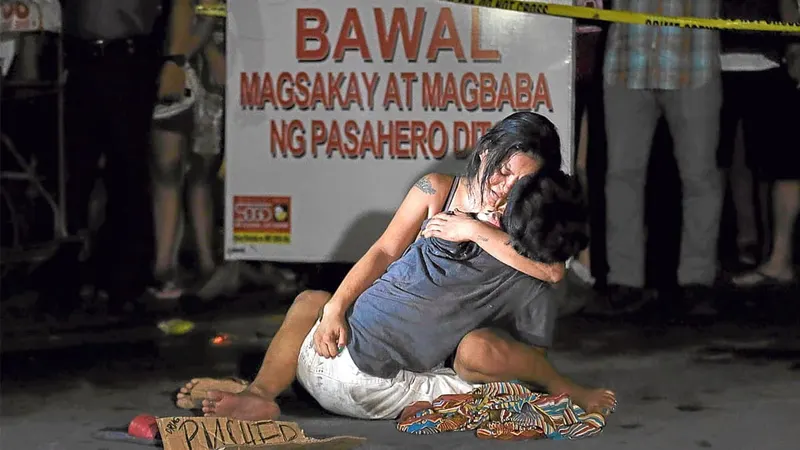
As Rodrigo Duterte prepares to face an International Criminal Court murder charge on Nov. 30, 2026, Filipino photographers who documented his drug war say their images remain proof of the killings.
The former president is accused of the crime against humanity of murder over deaths between 2011 and 2019. For the journalists who worked Manila’s streets at night, the approaching trial has revived memories of weeping families, bodies on pavements and threats that followed their work, according to Inquirer.net.
The photographers who documented the drug war
Noel Celis, 43, photographed about 200 drug war killings while working for Agence France-Presse. Even now, his pulse quickens when a motorcycle draws beside him at a red light.
The fear comes from the two-man assassination teams known locally as riding in tandem. Celis told AFP that the memory remained scary after years of death threats connected to his photography.
One of his images showed a young woman holding the bloodied body of her boyfriend after gunmen shot him at a busy intersection. Published by the Inquirer on July 24, 2016, the photograph showed pedicab driver Michael Siaron in the arms of his partner, Jennilyn Olayres, in Pasay City.
The assailants left a sign calling Siaron a pusher. In a predominantly Catholic country, the scene recalled Michelangelo’s La Pieta, in which Mary cradles Christ after the crucifixion. The photograph became the defining image of the crackdown.
Celis, Dondi Tawatao and Kimberly dela Cruz spoke with AFP before the trial, the news agency reported. Their accounts describe not only what happened to victims, but also what repeated exposure to death did to those carrying cameras.
A mental map of death in Manila
Journalists on the beat called themselves nightcrawlers, borrowing the name of a Hollywood film about camera crews pursuing late-night violence in Los Angeles. Police initially tipped them off about killings, the photographers said, but stopped as public anger grew.
They then followed mortuary vans summoned to collect bodies. After four years on the beat, Tawatao said the deaths had become so normalized that he stopped going to scenes unless at least three people had been killed.
Tawatao, 46, returned with AFP to a garbage-strewn street where he had photographed two bodies beneath the exposed roots of a banyan tree on a rainy night 10 years earlier. Two handguns lay nearby, which he believed had been planted.
“It was very dark, very sinister. It’s supposed to be the tree of life, but on that night, it became the tree of death,” he told AFP.
The work changed his relationship with Manila. Ordinary walks could bring back the name of someone killed on that spot, leaving him with what he called a mental map of the deaths. He eventually left photography, primarily to rest mentally.
Dela Cruz, 36, found her first victim beside Manila’s railway tracks under a full moon. Another body lay on a major bridge, the man’s head wrapped in packaging tape. Beside him was a cardboard sign reading: “I’m a drug pusher, don’t emulate me.”
Some colleagues needed professional counselling, she said. One suffered recurring nightmares in which the drug war dead returned to life. Celis remembers the cries of wives and mothers, along with the metallic smell of blood.
Guilt, suspicion and the wake of Michael Siaron
Residents of the poor communities where many killings occurred sometimes feared journalists as much as police. Dela Cruz said residents treated her as an outsider and suspected she might be an intelligence operative or someone bringing harm.
Photographers also struggled with guilt because they could record a killing’s aftermath but could not save the victim. Celis said they faced accusations that they were profiting from other people’s suffering.
When Celis and a colleague attended Siaron’s wake, they feared angry relatives might attack them. Instead, they apologized for being unable to help. Celis told Olayres that the photographs could serve as evidence if charges were ever filed.
That purpose has acquired new weight with Duterte in ICC custody. His arrest and transfer to The Hague last year stunned photographers who had spent years watching powerful officials avoid accountability.
“I was shocked, because I didn’t think it was possible. We’ve only seen the powers that be get away with it,” Tawatao said.
Dela Cruz described a huge sense of relief when Duterte was flown to The Hague, saying it meant families had achieved some form of justice. Celis called the proceedings the natural consequence of a war that killed many people.
Why the photographs matter at the ICC trial
None of the photographers interviewed by AFP believed the campaign solved the country’s narcotics problem. They remain convinced that police murdered thousands to enforce Duterte’s will, ABS-CBN reported.
The trial will test evidence in court, not the moral force of a single image. Still, the photographers see their archives as a defense against denial. Tawatao invoked Holocaust deniers when describing the pictures as incontrovertible proof that the killings happened.
“A picture is powerful,” Celis said, “especially at this time, when standing history on its head is in vogue.”
For families, a photograph can preserve the name and final moments of someone reduced by a cardboard sign to an accusation. For the public, these records insist that each body belonged to a person with relatives, neighbors and a life beyond the police report.
Questions about Duterte’s ICC trial
When does Rodrigo Duterte go on trial?
Duterte is scheduled to go on trial at the International Criminal Court on Nov. 30, 2026, on a charge of murder as a crime against humanity.
What period do the allegations cover?
The ICC case concerns killings that took place between 2011 and 2019, according to the AFP report carried by Inquirer.net.
Why is the Pasay photograph called La Pieta?
The July 24, 2016 image showed Jennilyn Olayres cradling her slain partner, Michael Siaron. Its composition recalled Michelangelo’s sculpture of Mary holding Christ after the crucifixion.