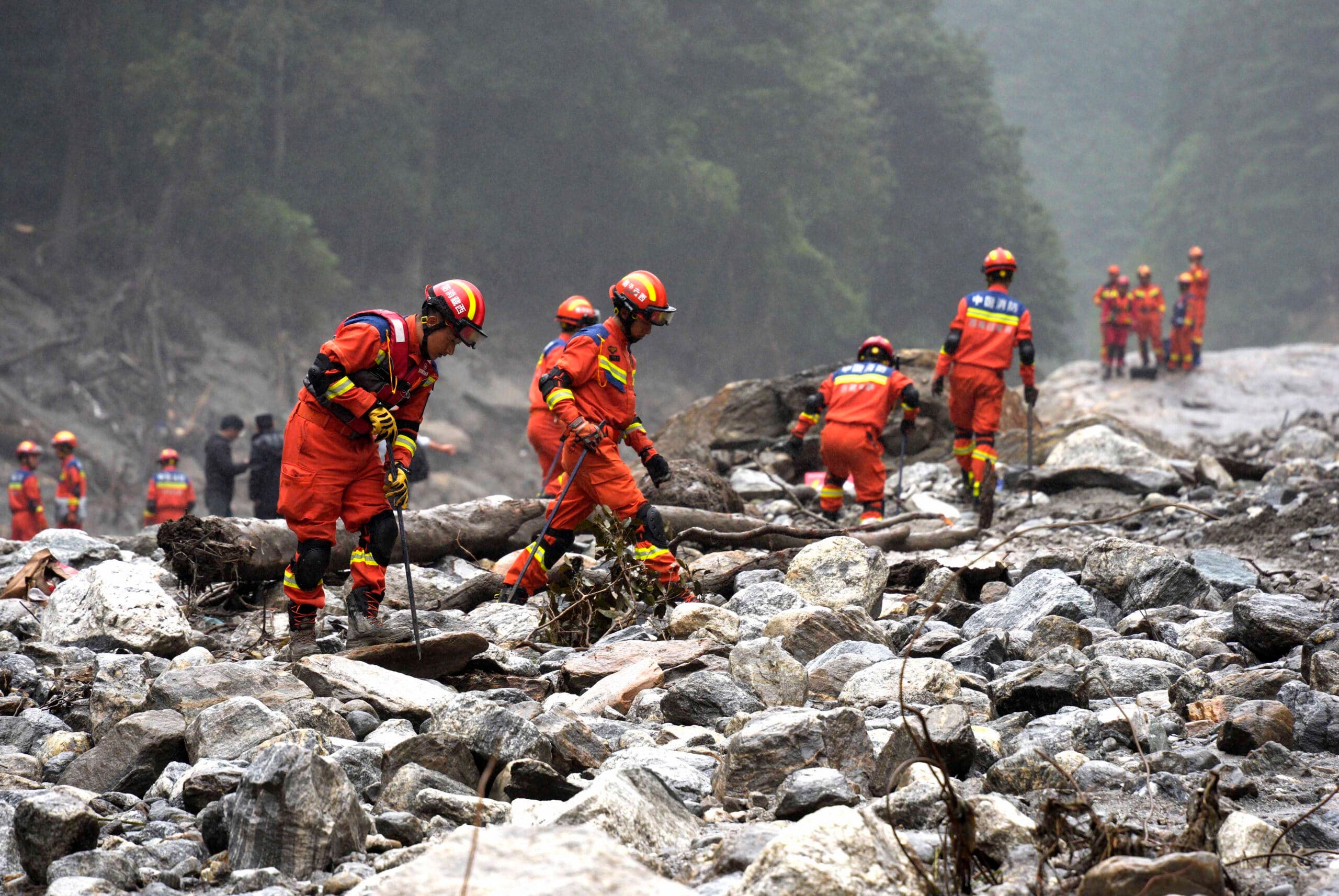
Rescuers in Nepal and China are racing against time to find nearly 3,000 people still missing after a tsunami-like wall of ice and mud tore through the Himalayan region, wiping out entire villages. The disaster, triggered by a glacial collapse on Wednesday, has already claimed 682 confirmed lives, with bodies reportedly washing up as far away as India.
In a glimmer of hope, the Nepali army managed to insert a pipe into a tunnel at the Trishuli 3A hydroelectric site late Saturday, where over 100 workers are believed to be trapped. Home Minister Sudan Gurung confirmed that air is now being pumped through the opening, and excavation work has begun to send a rescue team inside.
What caused the deadly flash flood?
The US Geological Survey says a glacial collapse at the Nepal-Tibet border unleashed the torrent. While the exact cause remains unclear, experts point to climate change as a key factor melting glaciers worldwide and increasing the risk of such disasters.
UN climate chief Simon Steill called the event a devastating reminder of how fragile mountain environments are. He warned that a warming climate, driven by humanity burning coal, oil, and gas, is making tragedies like this more frequent and severe, with vulnerable communities often bearing the brunt.
Survivors face agonizing wait
In Nepal's Nuwakot district, Buddhi Ram Dangol told AFP that all settlements near the river were swept away. There is nothing left. At an army base in Bidur serving as a rescue hub, desperate relatives crowd around lists of rescued people pasted on a wall.
Kalka Sharda, searching for his 18-year-old son Vinod, a hydropower labourer, said, I don't think there is any hope left. Because, if he was alive, he would have found a way to get in touch.
Nepal's disaster authority lists 933 hydropower workers among the missing, along with 517 foreigners, including trekkers and Hindu pilgrims heading to Tibet's sacred Mount Kailash. The Isha Foundation, led by Indian guru Sadhguru, reported that 80 members were on a group trip in the area, at the hard-hit Chinese border port of Gyirong, which has been completely washed away.
How is the international community responding?
The United States has pledged $3.6 million in humanitarian aid to Nepal, on top of an initial $500,000. Nepal's Foreign Minister Shisir Khanal said the reconstruction bill could run into billions of dollars, appealing for heavy-lift drones, forensic testing kits, and freezer units to handle decomposing bodies.
Fears of further flooding are compounding the search. A newly formed lake from the deluge poses a risk, though Chinese state media reported that it is discharging naturally and has been essentially drained. Rescue operations in Tibet's Gyirong area were temporarily paused over the threat but have since resumed, with 2,141 rescuers deployed.
What is the situation in Tibet and India?
Tibet, largely inaccessible to foreign journalists, reports seven deaths and 554 missing. Authorities say they have evacuated 555 stranded tourists and 499 Chinese residents. In India, officials have recovered seven bodies from rivers flowing from Nepal, believed to be flood victims.
The Chinese and Nepalese foreign ministers have discussed sharing satellite and hydrological data to improve early warning systems.
Frequently asked questions
How many people are missing in the Nepal-China floods?
Nearly 3,000 people are missing across both countries, with 682 bodies recovered so far. Nepal reports 2,426 people out of contact, while Tibet has 554 missing.
What caused the Himalayan flash flood?
The US Geological Survey says a glacial collapse triggered the flood. Climate change is increasing glacier melt worldwide, making such events more likely and severe.
Are there still chances of finding survivors?
Rescuers are focusing on tunnels at the Trishuli 3A and 3B hydroelectric sites, where over 100 workers may be trapped. Air is being pumped into one tunnel, and excavation is underway.
The road to recovery will be long, but the world is watching. For now, the priority remains saving lives, one tunnel, one village, one family at a time.