
Talaingod 13 conviction upheld as Makabayan protests
The Court of Appeals upheld the Talaingod 13 convictions. Makabayan calls the Lumad evacuation a rescue and says the case will reach the Supreme Court.
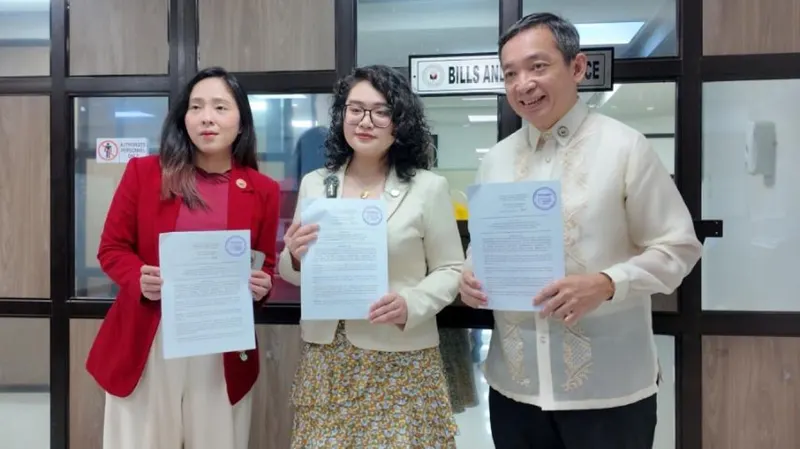
The Court of Appeals has upheld the child abuse convictions of the Talaingod 13, prompting Makabayan lawmakers on Friday, Nov. 27, 2026, to denounce the ruling and announce a Supreme Court appeal.
The decision keeps in place the convictions of former Bayan Muna Rep. Satur Ocampo, former ACT Teachers party-list Rep. France Castro and 11 other defendants over the 2018 evacuation of Lumad students in Talaingod, Davao del Norte, according to Inquirer.net.
Why the Court of Appeals ruling matters
The appellate court denied the defendants’ motion for reconsideration, leaving standing both its own ruling and the 2024 judgment of a Tagum Regional Trial Court. Makabayan said the Talaingod 13 would now elevate the case to the Supreme Court.
ACT Teachers party-list Rep. Antonio Tinio, Gabriela party-list Rep. Sarah Elago and Kabataan party-list Rep. Renee Co issued the coalition’s statement. They argued that the ruling punishes people who answered a call for help from children and teachers in a conflict-affected rural community.
“With this denial, the appellate court effectively affirms the conviction of former lawmakers France Castro and Satur Ocampo, along with volunteer teachers and other advocates, in a case that treats an act of rescue and solidarity as a crime,” Makabayan said.
The case reaches beyond the fate of the 13 defendants. It also raises questions about the safety of Lumad schools, the conduct of humanitarian missions and the state’s duty to protect children without discouraging civilians who respond to threats against them.
What happened in Talaingod in 2018?
Police arrested Castro, Ocampo and 16 others in November 2018 after intercepting five vans at a police and military checkpoint in Talaingod. Authorities accused the group of holding 14 minors, reportedly to teach them revolutionary ideas against the government.
The minors were students of a Salugpungan School in Talaingod. Castro and Ocampo maintained that the children were being rescued, not kidnapped or indoctrinated.
The 2024 child abuse case against the Talaingod 13 concerned allegations that they forcibly evacuated students after the closure of a Lumad school. The 13 convicted defendants include the two former lawmakers and 11 other volunteer school teachers and advocates.
Makabayan offered a sharply different account. The lawmakers said Lumad teachers and students sought help because militarization and paramilitary forces threatened their lives and communities. They said the children walked long distances at night to escape danger, with the defendants helping them reach safety.
“The 2018 evacuation was not child abuse. It was a response to a desperate call for help from Lumad teachers and students whose lives were under threat from the militarization of their communities and from paramilitary forces,” the lawmakers said.
Makabayan says the rescue was criminalized
The coalition said the court’s reasoning overlooked the conditions that caused the children to leave their communities. Its statement placed the threats, intimidation and militarization reported by the group at the center of the dispute.
“How can rescuing children from danger be treated as abuse? How can the act of bringing children to safety become a crime, while the threats, intimidation, and militarization that drove them from their homes are brushed aside?” the lawmakers asked.
They said the prosecution reversed justice by punishing compassion while leaving the dangers faced by the children unexamined. Their statement ended with a direct defense of humanitarian work and political solidarity.
“Rescuing children from danger is not a crime. Standing with the Lumad people is not a crime. Solidarity must never be criminalized,” they said.
Makabayan also called for the protection of Lumad children, communities, teachers and schools from militarization, harassment and attacks. For families in remote areas, that demand concerns the basic conditions needed for children to study without fear and for teachers to work without armed pressure.
From Duterte-era charges to a Marcos-era conviction
Advocates have described the charges as a Strategic Lawsuit Against Public Participation, or SLAPP. They noted that the case was filed during the Duterte administration and produced a conviction under the Marcos Jr. administration.
That timeline gives the appeal weight across political lines. Whatever the Supreme Court decides, the case tests how the justice system handles competing accounts of child protection, state security and civilian action in communities affected by conflict.
In July, clergy, Indigenous peoples, Moro leaders, church workers, educators and human rights advocates marked the second anniversary of the conviction by calling for the Tagum court’s decision to be reversed. Their gathering showed that concern about the case extends beyond party-list politics.
The host, the University of the Philippines Institute of Human Rights at the College of Law, maintained that the 13 individuals committed no crime. It described their actions as part of a humanitarian and solidarity mission to protect Lumad children and families displaced by conflict and militarization.
Castro says she will not evade justice
Castro, a longtime opposition voice, turned emotional after her conviction. She said she had spent decades protecting children as a teacher and lawmaker, contrary to the accusations brought against her.
In an interview with reporters on July 15, Castro admitted that the decision hurt her. She nevertheless said she and Ocampo would not evade justice and intended to challenge the ruling.
That commitment now takes the form of the promised Supreme Court appeal. Makabayan said it stood in full solidarity with the defendants and would continue seeking justice and accountability.
Questions about the Talaingod 13 case
Who are the best-known members of the Talaingod 13?
Former Bayan Muna Rep. Satur Ocampo and former ACT Teachers party-list Rep. France Castro are the best-known defendants. The group also includes volunteer teachers and other advocates convicted in the child abuse case.
Why did the Talaingod 13 evacuate Lumad students?
Makabayan and the defendants said they responded to requests for help from Lumad teachers and students who feared militarization and paramilitary forces. Prosecutors alleged that the students were forcibly evacuated after a Lumad school closed.
Where will the Talaingod 13 take their case next?
Makabayan said the defendants would bring the case to the Supreme Court after the Court of Appeals denied their motion for reconsideration and affirmed their convictions.