
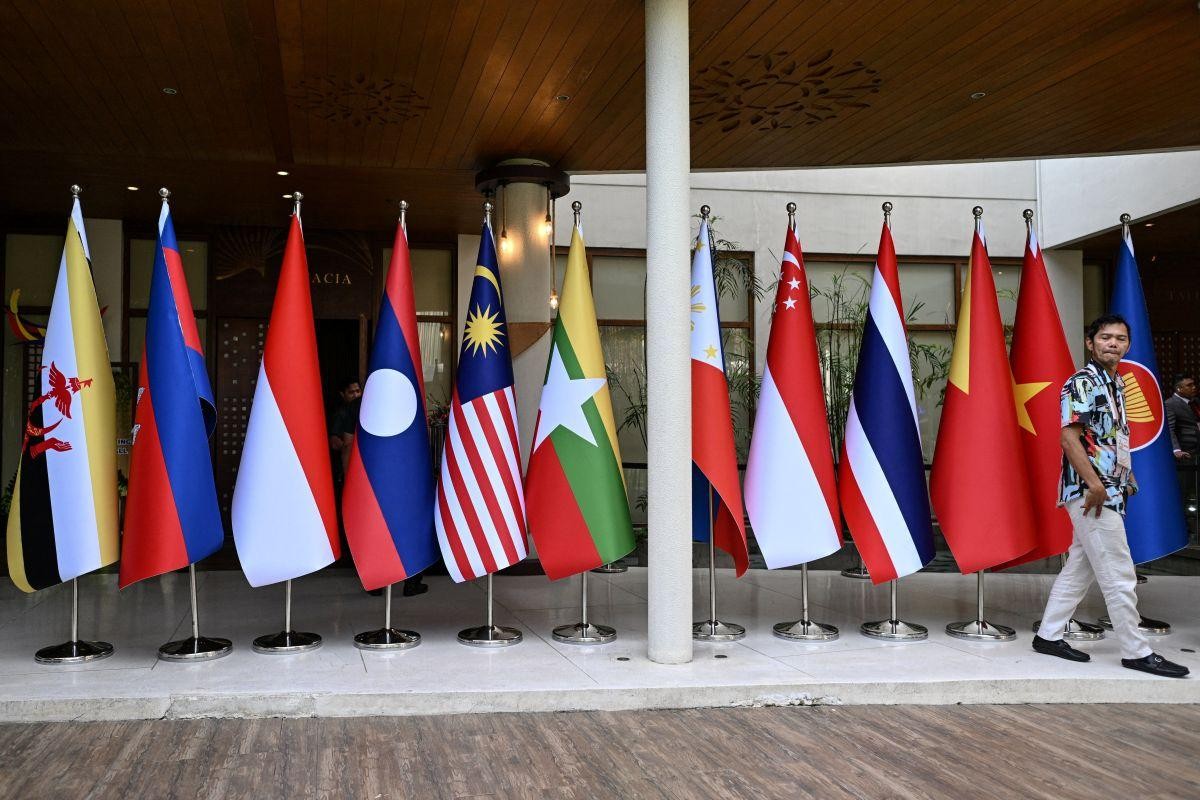
Southeast Asian foreign ministers opened meetings in Manila on Saturday, November 14, as the Philippines chairs a diplomatic weekend aimed at forging a unified ASEAN response to rising oil prices, security tensions, and an approaching El Niño.
President Ferdinand “Bongbong” Marcos Jr., who will chair the November 15 to 17 ASEAN summit, said the overlapping crises leave the bloc no choice but to act together. According to AL-Monitor, the meetings cap a weekend of diplomacy in which ASEAN leaders will sit down with counterparts from the United States, China, and Japan.
Marcos calls for ASEAN unity
“Especially at a time when we face multiple crises, from rising oil prices to security concerns and the approaching El Niño, ASEAN needs to act as one,” Marcos said ahead of the meetings, according to GMA Network.
“It is very important that we are united and find plans and solutions to address these problems,” he added.
The agenda is wide: the economic fallout of the Middle East conflict, Myanmar, the South China Sea, and transboundary pollution. For an import-dependent economy like ours, the fuel question hits closest to home.
The Philippines and other Southeast Asian economies that rely on imported fuel are absorbing higher energy costs that have squeezed households and businesses and stoked inflation. The crisis has exposed the limits of regional energy security; a proposal for a shared oil stockpile remains under study, Yahoo! News reported.
A summit of the Asia Zero Emission Community, a Japan-led framework pursuing energy security, growth, and decarbonisation at the same time, will also convene next week.
Trump in Manila, and a jeepney driver's plea
US President Donald Trump will be in Manila for the summit. He said this week he was unlikely to order new military strikes on Iran after appeals from countries including Qatar, offering some reassurance to energy markets. The prospect of renewed military action and disrupted oil supplies still weighs on fuel-importing countries.
For ordinary Filipinos, the conflict is not an abstraction. Lito Albino, a 50-year-old jeepney driver, appealed to Trump ahead of the meetings to help end the conflict, saying ordinary workers were bearing the consequences of a war they had no part in.
The conflict involving Iran has forced him to work longer hours for less money. With three children and household expenses to cover, higher fuel costs have made it harder to keep his family afloat.
“No one truly wins in a war. It is the poor and marginalised people like us who suffer the most,” Albino said.
Albino's words should follow the delegates into every session. It takes courage for a working man to speak that plainly, and the summit should reward it with results.
Myanmar tests ASEAN's common position
Myanmar will test the bloc's ability to hold a common line on the crisis that has engulfed the country since the military seized power in 2021.
Leaders are expected to review the implementation of the bloc's five-point consensus, its main framework for addressing the crisis, Philippine foreign ministry spokesperson Dominic Xavier Imperial said at a press conference on Friday. Their decision will be reflected in a negotiated document issued after the summit.
Myanmar has been in turmoil since the military ousted Aung San Suu Kyi's elected government in the 2021 coup, triggering a civil war that the United Nations estimates has killed 100,000 people and displaced more than 3.5 million.
Coup leader-turned-president Min Aung Hlaing's military has received support from China, India, and Russia. His administration has gained increasing international recognition in recent months, with some ASEAN countries reengaging and US officials holding secret talks as the Trump administration reverses years of isolation, The Straits Times reported.
That shift deserves scrutiny. Activists plan to protest during the summit, demanding that ASEAN maintain its exclusion of Min Aung Hlaing from leaders' meetings. A bloc that prizes consensus must not let convenience bury accountability.
South China Sea talks with China
The South China Sea will feature in discussions with China. Negotiations on a long-delayed Code of Conduct are about 70% complete, Imperial said, though he cautioned the figure represents overall progress in negotiations, not the proportion of text agreed.
For Filipino fishermen and coastal communities, that code is not diplomatic furniture. It is the difference between working their waters in peace and navigating harassment at sea. The Philippines should keep pressing for a binding agreement, with our Western partners standing beside us.
Protests expected during Trump's visit
Beyond the meeting rooms, Trump's visit is expected to draw protests from workers, students, and left-wing groups calling for an end to the Middle East conflict and for the US-led Pax Silica to be scrapped. Myanmar will also feature in the demonstrations.
Manila has hosted summits before, but this one arrives with the region carrying heavier burdens than usual. The measure of success will not be the communiqué's length; it will be whether fuel prices ease, whether Myanmar's generals face consequences, and whether the South China Sea becomes safer for the people who live off it.
Frequently asked questions
When and where is the ASEAN summit being held?
The ASEAN summit runs from November 15 to 17 in Manila, with foreign ministers' meetings opening on Saturday, November 14. The Philippines chairs the gathering.
What are the main issues on the agenda?
Leaders will discuss rising energy costs, the Middle East conflict's economic fallout, Myanmar, the South China Sea, transboundary pollution, and the approaching El Niño.
Will US President Donald Trump attend?
Yes. Trump will be in Manila for the summit and is expected to hold talks with ASEAN leaders. His visit is also expected to draw protests over the Middle East conflict.