
The Department of Environment and Natural Resources launched a nationwide ecosystem restoration program on Thursday, October 29, targeting critical wetlands, rivers, and coral reefs to shield communities from the punishing dry heat expected from a very strong El Niño.
Environment Secretary Juan Miguel “Mitch” Cuna said the agency is acting now, before the drought tightens its grip, because functioning ecosystems are the cheapest and most reliable defense a barangay can have.
What the DENR has done so far
Cuna laid out the early results in a department statement reported by Inquirer.net: nearly 100 metric tons of waste pulled from Manila Bay tributaries, the fragile hydrology of the Agusan Marsh peatlands under strict protection, and coral reefs in Masbate and Aurora being watched closely for heat stress.
“We are ensuring that our ecosystems remain functional buffers against extreme heat. Protecting our wetlands, rivers, and reefs nationwide is one way of protecting the communities and ensuring environmental survival,” Cuna said.
“By extracting nearly 100 metric tons of waste from Manila Bay tributaries, preserving the delicate hydrology of the Agusan Marsh peatlands, and protecting heat-stressed coral reefs in Masbate and Aurora, we are taking concrete steps to help ecosystems withstand the impacts of El Niño and strengthen the resilience of communities that depend on them,” he added.
The program is expected to run through the El Niño period, which forecasters say could stretch into the first half of 2027, according to Context.ph.
Agusan Marsh: the natural sponge of Caraga
In the Caraga region, the Protected Area Management Office of the Agusan Marsh Wildlife Sanctuary has rolled out strict ecosystem-based adaptation measures for its peatlands and freshwater wetlands. These areas work like natural sponges: they regulate water flow, store massive amounts of carbon, and cool the surrounding air.
The measures include reforesting riparian buffer zones with tree species suited to wetland conditions and monitoring drainage canals to prevent excessive water loss. For the farming and fishing communities around the marsh, that means steadier water supplies when the dry months bite.
Nearly 99 tons of waste out of Pampanga waterways
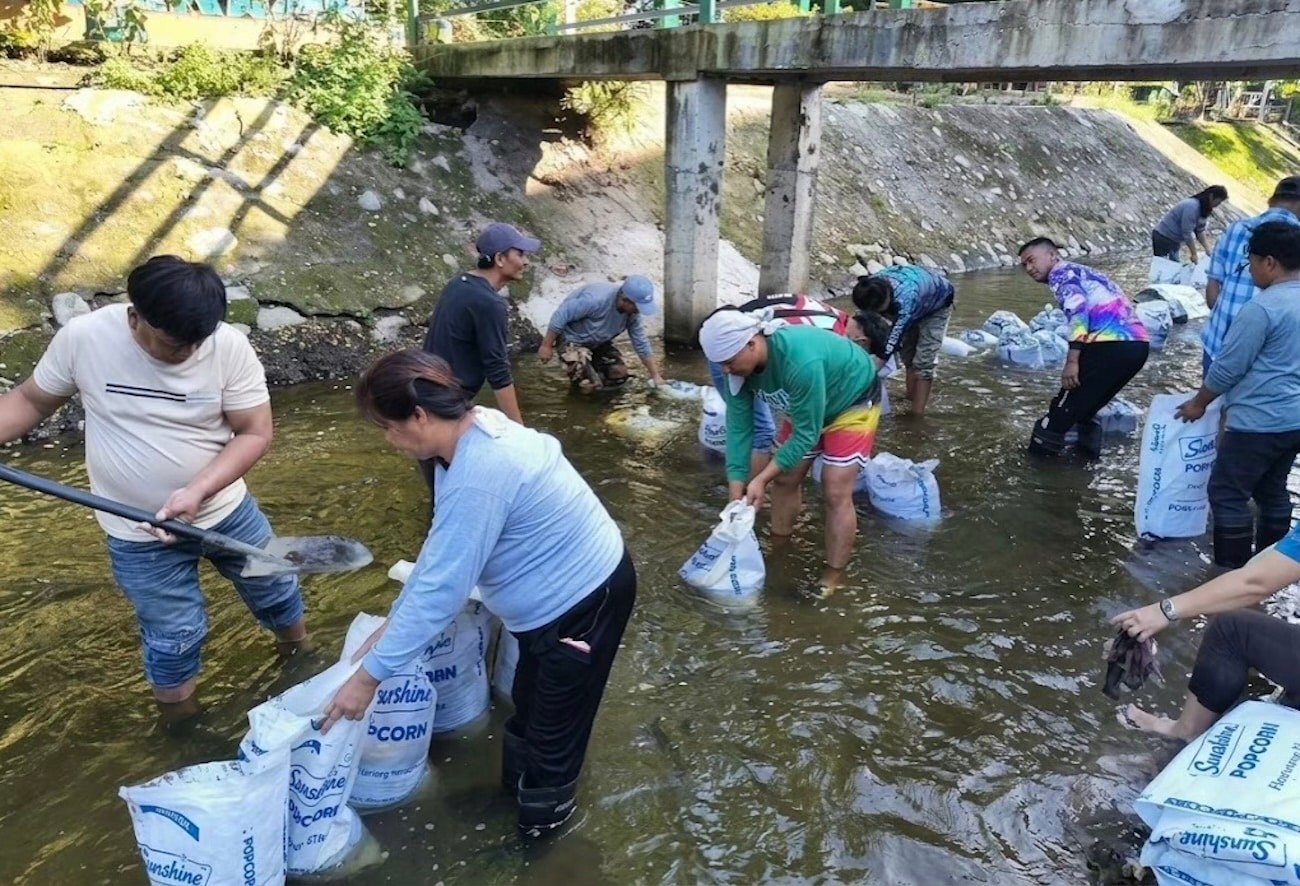
In Metro Manila and Central Luzon, the DENR's Manila Bay Site Coordinating and Management Office intensified river cleanups under the Manila Bay Rehabilitation Initiative. In Pampanga, River Rangers carried out a 10-day cleanup of river channels, creeks, and estuaries, working with laborers hired through the DOLE Tulong Panghanapbuhay sa Ating Disadvantaged/Displaced Workers program.
The operation removed 98,618.93 kilograms of solid waste, about 15,267 sacks, from trash traps and riverbanks. Removing that buildup keeps water moving through waterways and cuts the debris that would otherwise choke tributaries leading to Manila Bay when flows shrink during dry spells.
The office is also monitoring water sources and creek tributaries in Bulacan, Pampanga, Nueva Ecija, Bataan, and Tarlac, coordinating with other agencies and local government units on emerging problems. GMA News Online reported that the nationwide program aims to blunt the drought impact of the strong El Niño across all three ecosystem types.
DENR Region 3 is tracking marine heat stress in the coastal waters of Aurora, Bataan, and Zambales to protect fisheries from rising sea temperatures. The agency has also sustained watershed restoration and forest protection work across critical watersheds in Aurora, Bataan, Nueva Ecija, and Zambales, according to the Daily Tribune.
Masbate's corals get biweekly checkups
In the Bicol region, the provincial environment office in Masbate identified shallow coral areas and seagrass beds in Mobo and San Jacinto that are vulnerable to extreme heat. Field teams now monitor coral bleaching and fish kills every two weeks and report their findings to the Bureau of Fisheries and Aquatic Resources, municipal agriculture offices, and disaster risk reduction offices.
Personnel have cleared blocked waterways to keep seawater flowing through mangrove forests, and they have barred boat anchoring and the extraction of marine resources in reef areas hit by high temperatures so the coral can recover. Fisherfolk and community groups are being briefed on how extreme heat harms marine life.
Why this matters for El Niño planning
El Niño years hit the poorest towns hardest: wells run low, rice fields crack, and fish catches shrink. The DENR's bet is that healthy wetlands, clean rivers, and intact reefs can soften each of those blows. The cleanup numbers from Pampanga show the scale of what has been neglected for years, and the marsh and reef work shows what steady, science-based protection looks like.
The challenge, as always, is whether the effort lasts beyond the emergency. River Rangers on a 10-day contract will not keep 99 tons of waste from coming back. But the coordination between DENR, DOLE, BFAR, and local governments is a start, and for the communities along Manila Bay, the Agusan Marsh, and Masbate's coasts, it is the defense they have.
Frequently asked questions
What is the DENR restoration program for El Niño?
It is a nationwide drive to restore wetlands, rivers, and coral reefs so ecosystems can buffer communities against the extreme dry heat of the incoming very strong El Niño, launched on October 29, 2026.
How much waste was removed from Manila Bay tributaries?
River Rangers removed 98,618.93 kilograms of solid waste, equivalent to 15,267 sacks, from trash traps and riverbanks in Pampanga during a 10-day cleanup.
Which coral areas are being monitored for bleaching?
The DENR's Masbate office is checking shallow coral areas and seagrass beds in Mobo and San Jacinto every two weeks, while Region 3 monitors marine heat stress off Aurora, Bataan, and Zambales.