
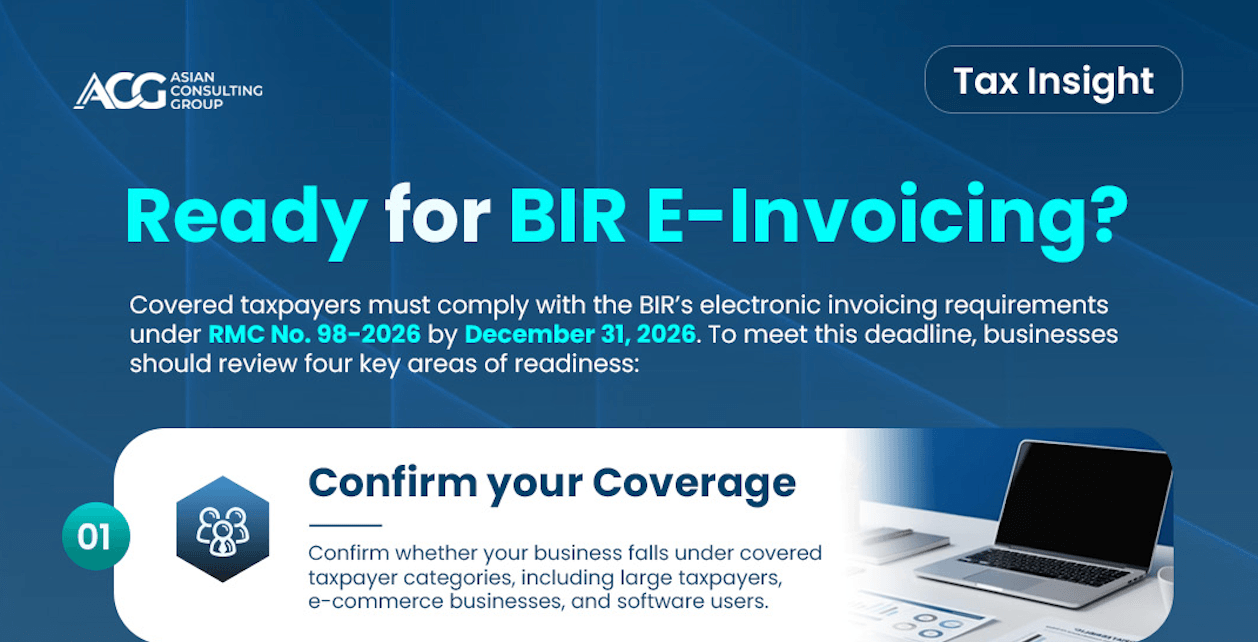
MANILA, Philippines — Thousands of Philippine businesses have until December 31, 2026, to switch to electronic invoicing under Revenue Memorandum Circular No. 98-2026, and the Bureau of Internal Revenue has made clear that an emailed PDF will not count as compliance. The rules, explained by tax expert Mon Abrea in Rappler's tax column, cover e-commerce sellers, large taxpayers, and any company running computerized accounting systems, with only micro taxpayers exempt.
The stakes reach beyond the big malls of Makati. Family firms in Cebu, cooperatives in Davao, provincial distributors, and online sellers in Ilocos all fall inside the net if they match any covered category. Being outside the Large Taxpayers Service does not, by itself, exempt a company, Abrea warned.
Who must comply with the BIR e-invoicing rules
The circular covers small, medium, and large taxpayers engaged in e-commerce or internet transactions, taxpayers under the Large Taxpayers Service, those classified as large under the Ease of Paying Taxes Act and Revenue Regulation No. 8-2024, and anyone using a Computerized Accounting System or invoicing software. The Commissioner of Internal Revenue can also add other taxpayers by directive.
The definition of e-commerce is broad. It includes transactions in physical or digital goods and services conducted through electronic networks. BusinessMirror, citing the applicable rules, confirmed that micro taxpayers alone are exempt, while covered small, medium, and large e-commerce taxpayers must be ready by December 31, 2026.
What counts as an electronic invoice
This is where many firms will stumble. An emailed PDF alone does not establish compliance. Under the circular, a valid electronic invoice must be generated through registered or accredited software in a structured electronic format, delivered through recognized channels such as email, QR codes, or web platforms, and contain data that can be extracted and transmitted to the BIR for sales reporting.
Invoices prepared manually in Word, Excel, Google Docs, or Google Sheets do not qualify. A PDF can still serve as the customer-facing copy, but the underlying system must produce the structured data the BIR requires. Printed copies remain allowed and must be given when a buyer asks for one.
Permits, certification, and branches
Before issuing a single electronic invoice, a company must secure a Permit to Issue Electronic Invoice from its Revenue District Office or Large Taxpayer Office. An existing Computerized Accounting System permit does not authorize e-invoicing on its own. The BIR has 20 working days to evaluate a complete application.
Within six months of getting the permit, the company must obtain Electronic Invoicing and Sales Reporting Certification, which tests whether the system can extract, process, and transmit sales data to BIR standards. Abrea cautioned that this six-month window is not an extension of the December 31 deadline. Failing to get certified is grounds for revocation of the permit.
Branches are covered too. Compliance extends to the head office and all registered branches even if the covered activity happens at only one location. Each distinct invoicing system needs its own permit, and any migration to a new platform requires a new or amended one.
Corrections, outages, and foreign companies
Issued electronic invoices cannot be deleted, altered, or modified. Corrections require a credit note or credit memo referencing the original invoice, or a new invoice if the amount must increase. A bill that wrongly shows ₱50,000 instead of ₱5,000 needs a ₱45,000 credit memo; the original record stays untouched.
During system outages or cyber incidents, the obligation to invoice continues. Firms must issue BIR-authorized manual invoices and replace them with electronic versions once systems are restored. Abrea urged companies to document contingency procedures and assign clear staff responsibilities.
Philippine subsidiaries and branches of multinational groups must assess their own classification and systems; a regional billing center abroad does not exempt them. Nonresident digital service providers follow separate rules under Revenue Regulation No. 3-2025, which allows electronic sales invoices that need not be registered with the BIR if prescribed information and language requirements are met.
The Daily Tribune reported that businesses using computerized systems subject to mandatory e-invoicing must also incorporate required creditable withholding tax functionality by December 31, 2026, unless the BIR prescribes a later date.
What corporate leaders should do now
Abrea's advice is direct: assign a joint finance, tax, and IT team to confirm coverage, map invoicing systems and branches, prepare permit applications, and schedule certification testing. Testing should include invoice corrections and outage recovery, not just successful generation. Firms with complex systems should get advice from qualified tax experts early to avoid penalties.
Done right, e-invoicing can reduce manual reconciliation and make honest compliance easier while making deliberate evasion harder. Done carelessly, it can trap unprepared firms in penalties and stalled billing. The clock runs out on December 31, 2026.
Frequently asked questions
Is an emailed PDF a valid BIR electronic invoice?
No. The invoice must come from registered software in a structured format with data the BIR can extract and process. A PDF can only be the customer-facing copy of a compliant system.
Do all branches need separate compliance?
Compliance covers the head office and all registered branches, though permits for branches can bear the same permit number. Each distinct invoicing system requires its own permit.
Can a company edit an issued electronic invoice?
No. Issued electronic invoices cannot be deleted, altered, or modified. Corrections require a credit note, credit memo, or a new electronic invoice referencing the original.