
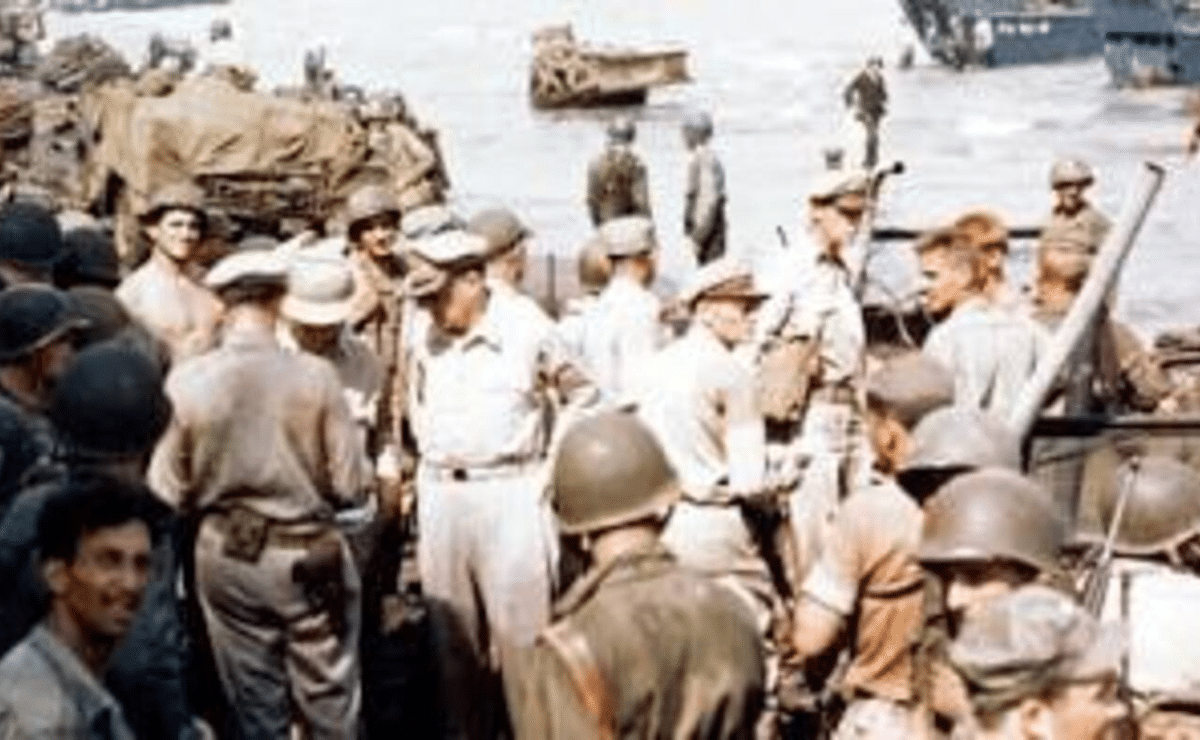
On the morning of Oct. 20, 1944, prisoners of war held at a Japanese camp known as Hotel Tacloban, two miles west of Tacloban town in Leyte, woke to find their guards had vanished. By noon that same day, US Army Rangers had entered the camp and freed 165 Allied prisoners, according to a report by INQUIRER.net USA marking the anniversary of the rescue.
The liberation came on the very day American forces landed on Leyte, opening the campaign to retake the Philippines, a landing Encyclopedia Britannica dates to Oct. 20, 1944, days before the larger naval Battle of Leyte Gulf began on Oct. 23. Yet unlike Cabanatuan or Camp O'Donnell, the Hotel Tacloban camp was almost erased from the record. Official US documents after the war stated the camp never existed, INQUIRER.net USA reported.
One American among 165 prisoners
Hotel Tacloban was unlike the well-known POW camps of the Japanese occupation. Of the 165 prisoners, 164 were British or Australian, most captured while fighting the Japanese on Borneo. The single American was Douglas Valentine, an Army enlistee who had joined at only 16 years old.
Valentine had been sent to New Guinea, where his inexperienced unit faced an elite Japanese force called the South Seas Detachment. He was the only survivor. He watched the Japanese brutally mistreat the wounded men of his unit, and though he too was wounded, he was spared the bayonet, a mercy he never understood. After repeated beatings, he was blindfolded and moved to the coast, arriving in Leyte in late July 1942 after weeks of grueling travel.
When told where he was, Valentine had no idea where Leyte or the Philippines were. The English spoken by his fellow prisoners came in accents so unfamiliar he struggled to follow them.
Life inside the camp
Local Filipinos were strictly prohibited from approaching the camp, cutting the prisoners off from the guerrilla networks that sustained resistance elsewhere in the islands. As Wikipedia's coverage of the Philippines campaign notes, American and Filipino guerrillas fought the occupation throughout the war, but the Hotel Tacloban prisoners had to rely on themselves.
Two forces ruled their days, according to INQUIRER.net USA. The first was the Japanese commandant, Captain Yoshishito, and his guards, who beat prisoners for the smallest infraction. The second was internal: British officers who considered themselves superior to the Australians and treated enlisted men with disdain. The quarreling between British and Australian officers never stopped, even in such dire circumstances.
The Rangers arrive
When dawn broke on Oct. 20, 1944, the guards were simply gone. The prisoners were effectively free, but most were too weak and sick to leave. They could only wait and hope the advancing American air, sea and ground forces knew where they were and would not bomb the camp.
By noon, US Army Rangers walked in. The prisoners felt elation mixed with fear, and many felt shame at their wasted bodies beside the healthy, vigorous soldiers.
The Rangers had Valentine's name on their rescue list. He was placed on a stretcher and separated from the men he had survived more than two years beside. The parting was painful; he realized he might never say goodbye to the Australians and Britons who had shared his captivity.
Why the rescue was nearly forgotten
After the war, US documents denied the camp had ever existed. Valentine carried survivors' guilt for years before finally telling the story of Hotel Tacloban himself, the account that preserved the rescue in the historical record.
For Leyte, the rescue remains part of a larger story. The same day the Rangers freed the prisoners, American forces were landing on the island's beaches, beginning the liberation of the Philippines that Filipinos and Americans fought for side by side. The rescue at Hotel Tacloban, small in numbers but immense in meaning, belongs to that history, and to the province that remembers it.
FAQ
What was Hotel Tacloban?
It was a Japanese prisoner of war camp located two miles west of Tacloban town in Leyte during World War II, holding 165 Allied POWs, mostly British and Australian.
When were the prisoners freed?
US Army Rangers entered the camp by noon on Oct. 20, 1944, the same day American forces landed on Leyte.
Who was the only American prisoner at Hotel Tacloban?
Douglas Valentine, an Army soldier who had enlisted at 16 and survived a Japanese ambush in New Guinea as the only member of his unit left alive.