
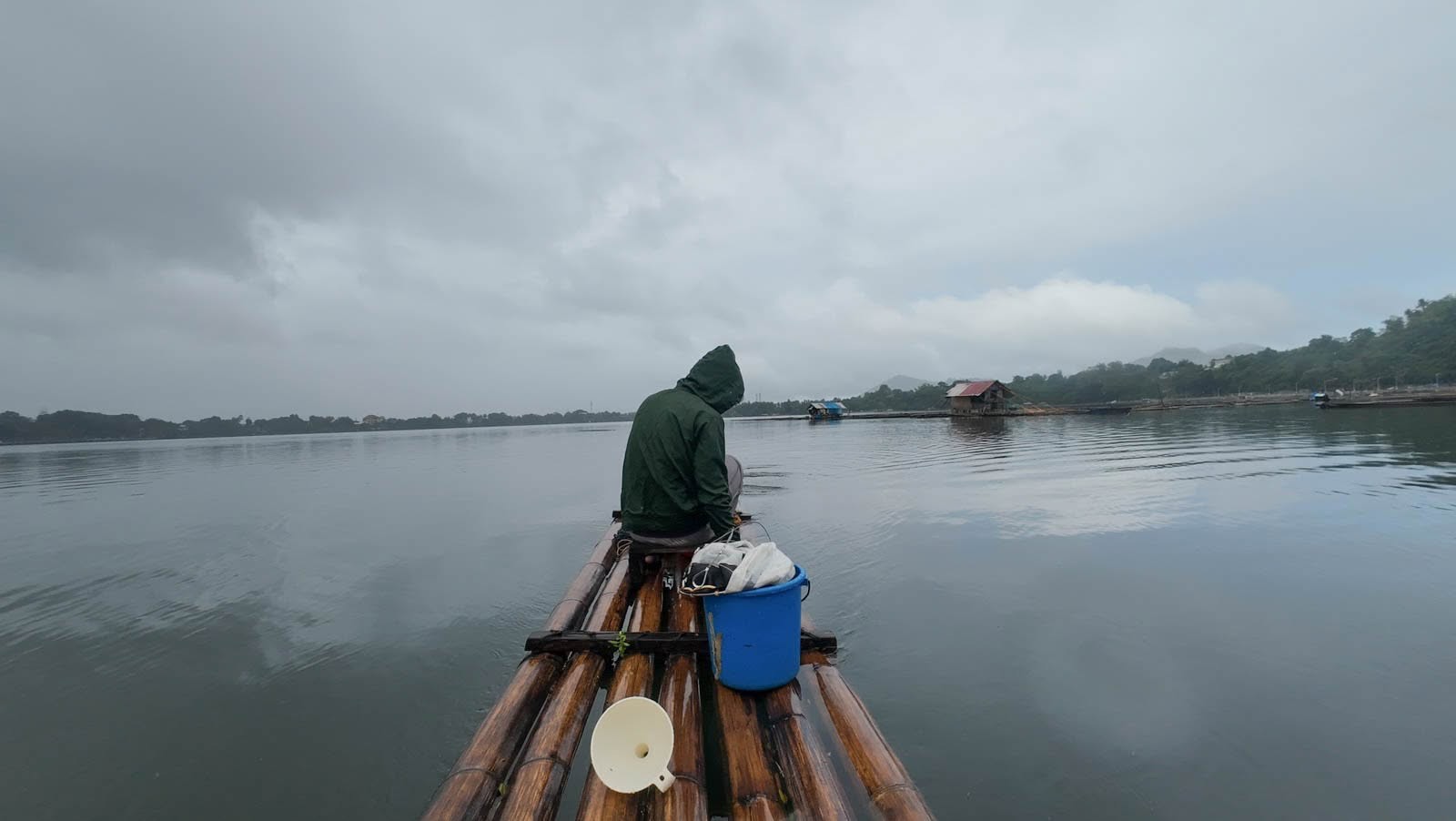
LUCENA CITY — The Laguna Lake Development Authority (LLDA) has issued a public appeal for help in tracking down those responsible for polluting Laguna de Bay. The agency says community reports are essential to holding violators accountable under the law.
In a public advisory released Sunday, July 19, the LLDA asked residents and local officials to report signs of possible water contamination. These include heavy bubbling or foaming on river surfaces, unusual water discoloration, and foul odors.
“The LLDA acknowledges the quick response of communities in reporting the immediate impacts of water contamination,” the agency said.
The advisory comes days after the LLDA permanently sealed the discharge outlet used by Manila Water Company Inc. (MWCI) in Binangonan, Rizal. That action followed a controversial pipeline flushing operation. The agency said the measure was meant to prevent similar discharges while its investigation continues.
The LLDA has yet to determine whether the flushing operation was linked to a reported fish kill on the Rizal side of Laguna de Bay. Investigators are still assessing the volume and quality of the discharged water through sampling and field inspections.
Why the lake matters
Laguna de Bay is the country's largest lake and the third-largest freshwater lake in Southeast Asia. It spans 352,000 to 366,000 square meters. The lake sits between Laguna province to the south and Rizal to the north.
Under the Philippine Clean Water Act, the LLDA enforces effluent standards and imposes sanctions on environmental violators. But the agency stressed that effective enforcement depends on identifying the exact source of pollution.
“We cannot fight environmental degradation in isolation,” the LLDA said. “Real progress depends on collaborative vigilance to determine who the real culprits are behind these illegal acts.”
The agency emphasized that protecting the lake cannot be done by government alone. Rather than focusing only on pollution after it spreads downstream, efforts should target the exact source so responsible parties can be held legally accountable.
The challenge of enforcement
The LLDA explained that while public reports often trigger emergency responses and safety advisories, investigators need precise information to trace pollutants to their source.
“Because the LLDA spans a massive regulatory jurisdiction, it is a logistical challenge for our inspectors to immediately survey every reported area in real time before downstream currents wash the critical evidence away,” the agency said.
Firsthand observations from residents and barangay officials are therefore essential in locating illegal discharges as they occur.
“While public concerns regarding environmental response times are understandable, addressing this issue requires recognizing that protecting our water resources is a shared responsibility,” the LLDA emphasized.
Currently, the lake is used for fisheries, flood control, power generation, non-contact recreation, irrigation, industrial cooling, as a waste sink for solid and liquid wastes, and domestic water supply.
What the public can do
The LLDA also appealed to Pollution Control Officers (PCOs) of industries operating upstream of recent contamination incidents. It asked them to review their waste management systems and cooperate in identifying the source of unauthorized discharges.
“As designated partners of the LLDA in environmental management, we call upon your professional integrity and environmental spirit to actively police your ranks, review your internal waste management systems, and assist us in identifying whoever is responsible for these unpermitted discharges,” the agency said.
To aid investigators, the public is urged to report specific indicators: active drainage pipes or bypass canals releasing chemicals, commercial tankers or trucks washing containers near waterways, and recurring patterns in the timing of unusual odors or discharges.
Residents are also encouraged to provide photographs, precise locations, nearby landmarks, company names, or geographic coordinates through the LLDA's official communication channels or Facebook page.
“Protecting the integrity of the Laguna de Bay basin is a shared responsibility, and your vigilance ensures our enforcement actions are both immediate and effective,” the agency said.
For a lake that sustains millions of Filipinos, every pair of eyes along its shores counts. The fight against pollution starts with us.