
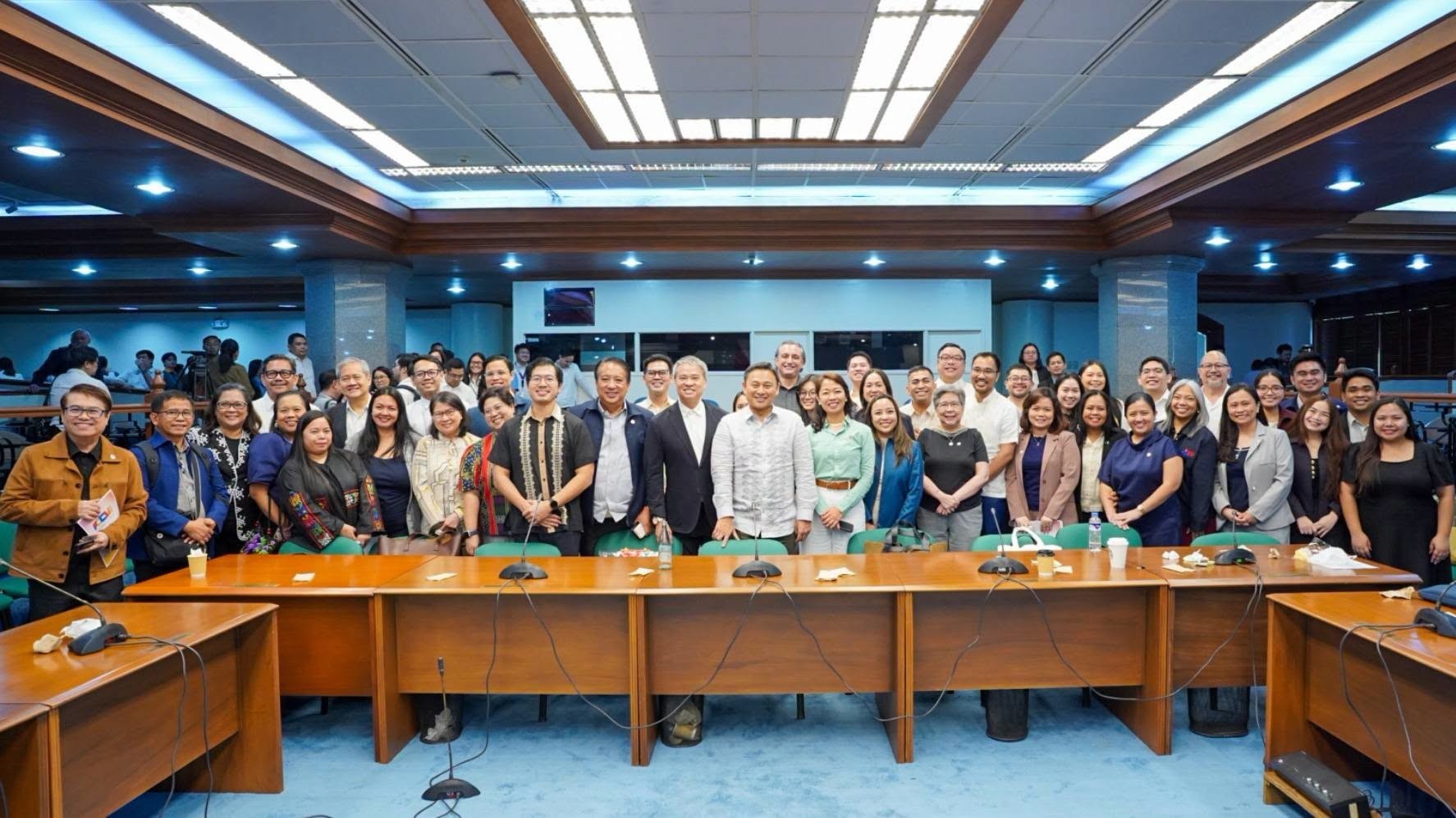
The Senate Finance Committee approved on Friday, October 16, the proposed 2027 budget of the Department of Education and its attached agencies at P969.79 billion, while DepEd pressed lawmakers for an additional P147.93 billion to fund programs left thin or unfunded by the National Expenditure Program.
The approved figure under the General Appropriations Bill is P6.17 billion lower than what the NEP originally set out, according to GMA Network. Of the total, P967.23 billion goes to DepEd proper and roughly P2.561 billion to its attached agencies, including the National Museum of the Philippines, the National Academy of Sports, the Philippine High School for the Arts, and the Teacher Education Council.
Why the ARAL Program became the flashpoint
The sharpest exchange at the hearing centered on the Academic Recovery and Accessible Learning Program, DepEd's flagship remediation initiative for struggling learners. The NEP gave ARAL zero pesos as a standalone item, and DepEd is asking for P15.63 billion to keep it running.
Senate President Sherwin Gatchalian did not hide his frustration. He said the program is doing exactly what it promises.
It's delivering what it intends to deliver, which is to teach our children how to read, how to count. But this year the budget for ARAL was reduced to zero, which is shocking. The very program that works is the one that got cut.
Senator Joel Villanueva went further, calling the zero allocation senseless and pointing to the scale of the need: roughly 13 million students across the country still require learning remediation. The House-approved version of the budget, according to Manila Bulletin, provides only P350 million for ARAL against DepEd's request of P15.32 billion, a gap Senator Erwin Tulfo also slammed during the hearing.
DBM: the money exists, just not as a line item
The Department of Budget and Management defended itself before the panel. DBM Director Vivien Labastilla said the program is not without funds; the money was simply folded into the budget for textbooks and other instructional materials rather than given its own line item.
That explanation did not satisfy the senators, and the committee moved to fix the problem structurally. The panel proposed creating a separate line item for ARAL in the 2027 budget so the public can see exactly what the program receives, and so DepEd no longer has to carve money out of other programs to keep remediation alive.
For a country still paying the educational price of pandemic school closures, transparency here matters more than accounting tidiness. When a program's funds hide inside a textbook budget, it becomes easy to trim, and the learners who depend on it pay the price. Reformist budgeting means naming the priority and funding it plainly.
ARAL is producing results, senators say
The fight over ARAL is not about a program that fails. Gatchalian told the committee that the program's Year 1 report shows 1.37 million learners from Grades 1 to 10 are no longer classified as struggling learners, and an estimated 730,000 more can now read at their proper grade levels.
Those numbers come from a country where years of learning loss have hit rural and low-income communities hardest, including many towns across the archipelago where classrooms were already stretched before the pandemic. Cutting a program that moves children from illiteracy to grade-level reading, while larger and less accountable line items survive intact, is the kind of budgeting that erodes public trust in government.
DepEd's wider wishlist
Education Secretary Juan Edgard Angara's department asked for the additional P147.93 billion for a range of initiatives, with P1.74 billion more for its attached agencies, according to Abante TNT. The ABS-CBN report placed the combined request at P149.67 billion, covering DepEd and its attached agencies.
The committee approved the DepEd budget subject to the submission of requested documents and continued discussion, which means the final numbers can still shift as the General Appropriations Bill moves to the plenary. Congress has separately reported boosts to education items elsewhere in the budget, including P2.10 billion for the Tertiary Education Subsidy, P1.77 billion for the Tulong Dunong Program, and P500 million for the School Safety and Security Program.
What happens next
The Senate will take up the DepEd allocation in plenary deliberations in the coming weeks, where the proposed ARAL line item and the request for added funds will face scrutiny from the full chamber. The House version, with its P350 million for ARAL, will have to be reconciled with whatever the Senate produces in the bicameral conference.
For the millions of Filipino children still catching up on lost learning years, the difference between P350 million and a properly funded remediation program is not an abstract fiscal question. It is the difference between a child who can read her textbook and a child who cannot.
FAQ
What is the ARAL Program?
The Academic Recovery and Accessible Learning Program is DepEd's remediation initiative that helps struggling learners catch up in reading and mathematics as part of the agency's broader Learning Recovery efforts.
How much did DepEd request for ARAL in 2027?
DepEd requested P15.63 billion for the ARAL Program, which received zero standalone funding under the 2027 National Expenditures Program.
How much was DepEd's approved 2027 budget?
The Senate Finance Committee approved P969.79 billion for DepEd and its attached agencies under the General Appropriations Bill, a P6.17 billion decrease from the National Expenditures Program.