
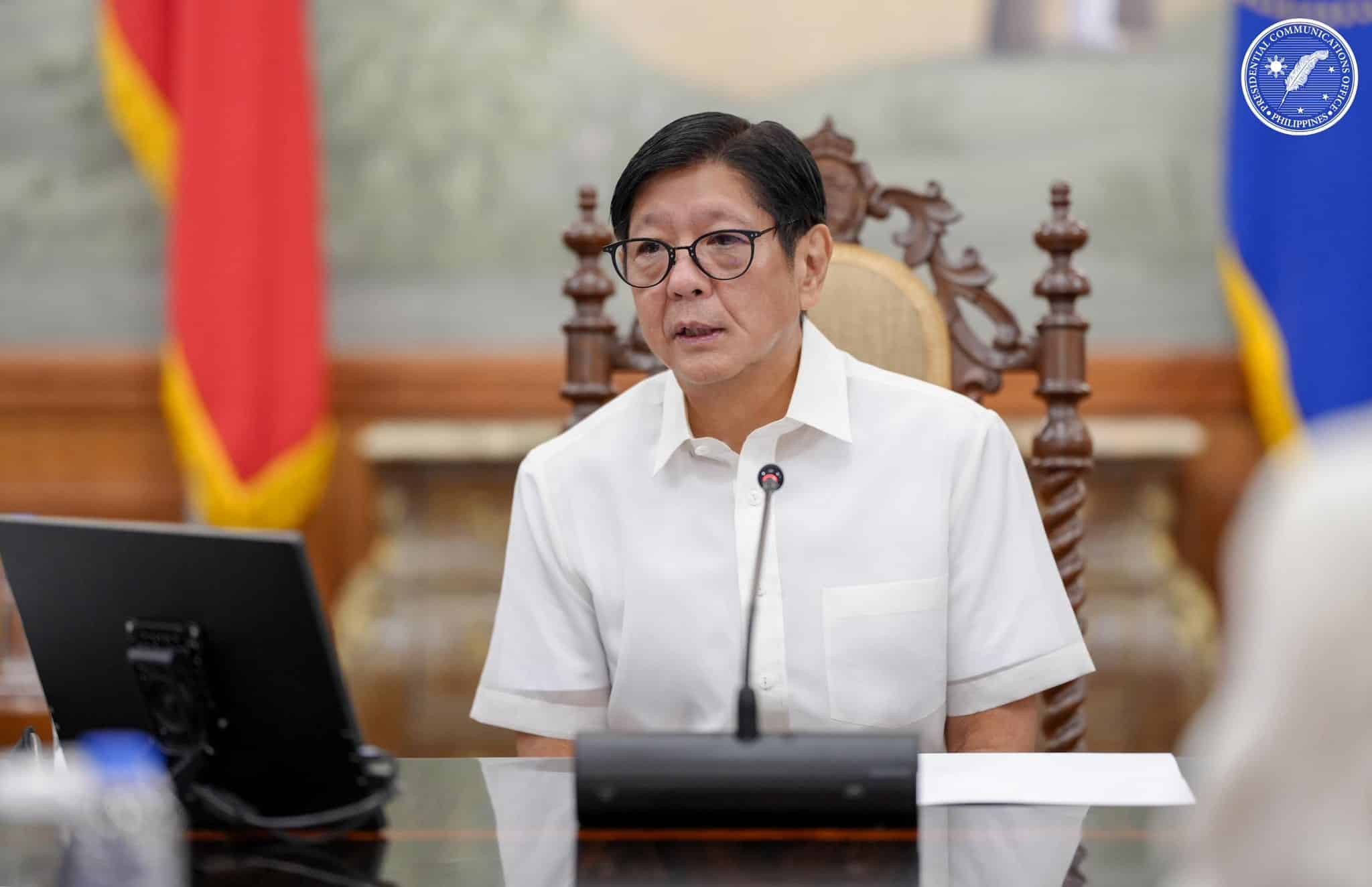
President Ferdinand Marcos Jr. has ordered a fresh review of the country's economic growth targets for 2026 and 2027, after the economy posted its weakest quarterly expansion since the pandemic.
Palace press officer Claire Castro announced on Tuesday that the Development Budget Coordination Committee (DBCC) will meet on December 1 to reassess the government's macroeconomic assumptions, including GDP growth, inflation, and the peso-dollar exchange rate, according to Inquirer.net.
An economy running below target
The numbers explain the urgency. The Philippine Statistics Authority reported that the economy grew by just 2.1 percent in the third quarter, slower than the 2.4 percent recorded in the previous quarter and far below the 4 percent posted in the same period last year. It was the weakest quarterly performance since the pandemic years, weighed down by soft household spending, weak investments, and struggling industries.
The December review comes only months after economic managers already lowered the 2026 GDP growth target to a range of 3.5 to 4.5 percent, from the original 5 to 6 percent projection. That June revision was blamed on domestic and external troubles in the first half of the year. Now even the reduced target looks out of reach: Rappler reported that the government is on track to miss its growth target for the fourth straight year unless the fourth quarter delivers a significant rebound.
Socioeconomic Planning Secretary Arsenio Balisacan said the economy would need to grow by 6.3 percent in the fourth quarter just to hit the lower end of the government's range, a rebound he described as challenging. The Daily Tribune noted that failure to reach the target would mark another blow to the administration's economic record.
Why growth slowed
Castro pointed to the crisis in the Middle East and the very strong El Niño as the main pressures bearing down on the economy.
“We know what has happened, and until now, we are still dealing with the crisis in the Middle East and the significant impact of the very strong El Niño,” Castro said.
“In the meantime, we have seen the government exerting every effort to implement projects and programs, primarily to ease the increase in the inflation rate so that it does not have a significant impact on our economy,” she added.
But the slowdown did not start with global shocks. It began in the third quarter of 2025, when infrastructure spending contracted sharply after the flood control corruption scandal broke. That scandal, which exposed billions of pesos in questionable contracts for flood control projects, remains the single most damaging self-inflicted wound on this administration's economic record. For a government that came to power promising clean governance, the lesson is plain: corruption is not just a moral failure, it is a growth killer. Every peso diverted from a flood control project is a peso that never reached a community that needed it, and the entire economy pays the price.
What the government is doing
Castro said the administration is pursuing programs to cushion the effects of slower growth, including measures to manage inflation, secure adequate supplies of food and petroleum products, and extend financing assistance to micro, small, and medium enterprises. She also cited efforts to promote the Philippines as an investment destination, particularly with the country hosting the 48th and 49th Asean Summits this year.
The government is also implementing the Uplift program to address the effects of the Middle East crisis and El Niño, Castro said.
“The government is already doing everything it can. It is not neglecting its responsibilities,” Castro said.
“If the government were not doing its job, you might already be lining up at gasoline stations because we would have no oil supplies,” she added.
Notably, Castro did not announce any new or drastic interventions to accelerate growth. The Daily Chronicle reported that the DBCC's December meeting will weigh global uncertainties, slower growth, and climate-related challenges in recalibrating the targets. Meanwhile, BusinessWorld reported that the surprise slowdown has triggered calls for the central bank to hold off on further interest rate increases and for the government to provide additional state support.
Can the fourth quarter deliver?
Balisacan remains optimistic that the fourth quarter will be better than the third, though he acknowledged the risks.
“Recovery toward next year's 5 to 6 percent target remains possible but requires stronger investment, easing price pressures, and renewed confidence. Energy shocks, El Niño, and implementation delays remain risks,” he said.
Some economists are far less sanguine. Analysts quoted by BusinessMirror warned that the 2.1 percent third-quarter reading stokes fears of stagflation, with one observer arguing the target should be treated as missed and that policy discussion should shift to limiting the damage heading into 2027. For 2027 through 2030, the Marcos administration expects growth of 4 to 5 percent.
For ordinary Filipino families, these are not abstract numbers. Slower growth means fewer jobs created, tighter budgets, and harder choices at the market and the pump. The provinces feel it first: farmers still reeling from El Niño, small businesses squeezed by high borrowing costs, workers whose remittances stretch thinner as prices rise.
The December 1 DBCC meeting will show whether the administration is prepared to be honest about how steep the climb has become. The President deserves credit for ordering the review rather than hiding from the numbers. But honesty must be followed by delivery: faster project implementation, real accountability for the flood control scandal, and relief that reaches the people before the next quarter's data comes in.
FAQ
When will the DBCC review the Philippines' economic growth targets?
The Development Budget Coordination Committee will meet on December 1, 2026, to reassess macroeconomic assumptions and targets for 2026 and 2027, including GDP growth, inflation, and the exchange rate.
How much did the Philippine economy grow in the third quarter?
The economy grew by 2.1 percent in the third quarter of 2026, its weakest quarterly expansion since the pandemic, according to the Philippine Statistics Authority.
What growth target did the government set for 2026?
Economic managers lowered the 2026 GDP growth target to 3.5 to 4.5 percent in June 2026, down from the original 5 to 6 percent range. Balisacan said the economy needs 6.3 percent growth in the fourth quarter to reach even the lower end.