
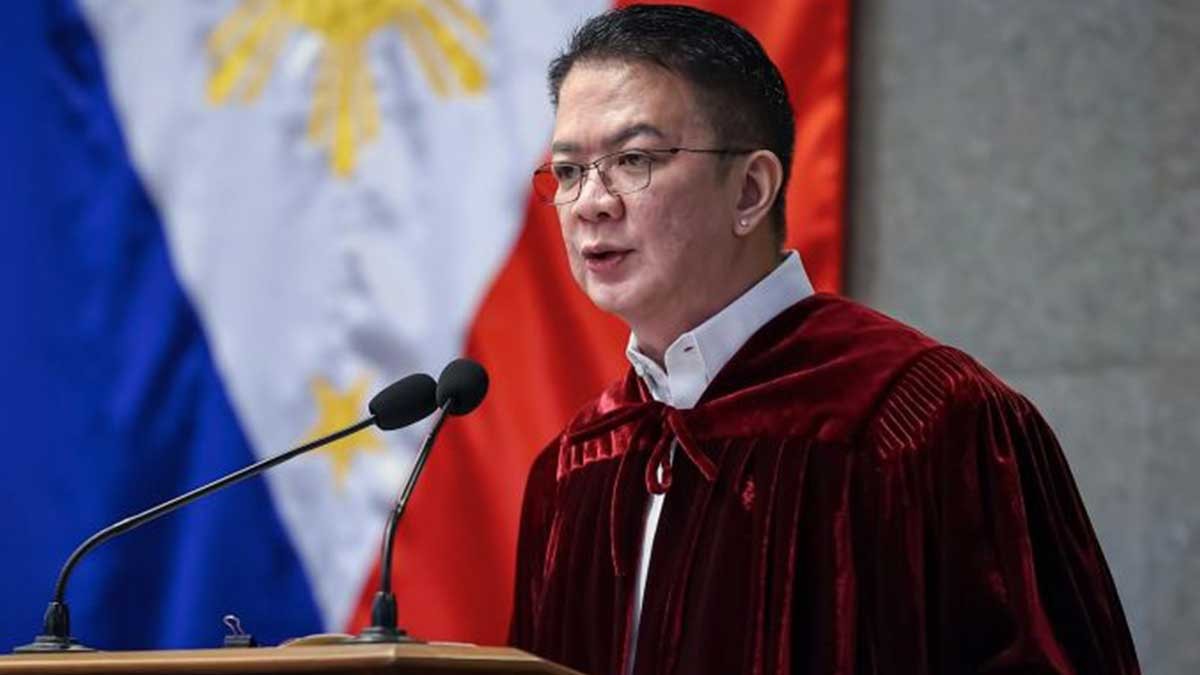
In a landmark ruling that could reshape the impeachment trial of Vice President Sara Duterte, the Senate Impeachment Court has ordered the Anti-Money Laundering Council to turn over her financial records. The decision, read by Presiding Officer Senator Francis Escudero, rejects the defense's claim that AMLC reports are protected from court subpoenas.
The ruling comes as a major win for the prosecution, which argues that Duterte amassed unexplained wealth during her time in office, including as vice president. Escudero cited Supreme Court precedents allowing both the Sandiganbayan and Congress to access AMLC records, saying the impeachment court holds the same authority.
Why the AMLC cannot hide behind confidentiality
Escudero quoted the 2021 Supreme Court case Republic v. Sandiganbayan, which stated that the AMLC is not just a repository of reports. It was created to investigate and prosecute money laundering, and blocking access to its records would undermine its mission.
“For the Anti-Money Laundering Council to refuse to disclose the information required of it would be to go against its own functions under the law,” Escudero said, citing the High Tribunal.
The defense had argued that releasing the records would expose AMLC officers to criminal penalties for breaching confidentiality. But Escudero dismissed this, noting that Congress and the Sandiganbayan have long compelled such disclosures.
What the AMLC found on Sara Duterte
During an April 22 House hearing, AMLC Executive Director Ronel Buenaventura confirmed that the council had identified covered and suspicious transactions involving Duterte, her husband Manases Carpio, and other relatives. Covered transactions are bank deals over P500,000 that banks must report. Suspicious transactions are those flagged by banks due to questionable circumstances.
Former Senator Antonio Trillanes IV, a longtime Duterte critic, had earlier filed a sworn affidavit claiming to have documents showing Duterte's unexplained wealth. At the hearing, Representative Leila de Lima randomly selected 19 transactions from Trillanes' affidavit. Buenaventura later confirmed that all 19 appeared in AMLC reports, bolstering the prosecution's case.
What happens next
The subpoena covers most of Duterte's financial records, except those involving a few companies with no direct links to her. The prosecution will now use this evidence to argue that Duterte violated the Constitution by failing to disclose her true wealth in her Statement of Assets, Liabilities, and Net Worth.
This is a pivotal moment in the trial, which has gripped the nation. For rural Filipinos and urbanites alike, the case raises questions about accountability and the rule of law. As a Catholic-majority country, many are watching to see if justice will be served, even for the powerful.
Frequently asked questions
What is the AMLC report about?
The AMLC report details financial transactions by Vice President Sara Duterte and her relatives that exceed P500,000 or are flagged as suspicious by banks. The prosecution says this shows unexplained wealth.
Why did the Senate reject the defense's objection?
The Senate cited Supreme Court rulings that allow courts and Congress to access AMLC records. It said the impeachment court has the same power as the Sandiganbayan and Congress to compel disclosure.
Who is Antonio Trillanes IV and what is his role?
Trillanes is a former senator and a vocal critic of the Duterte family. He provided an affidavit with documents he claims show Sara Duterte's hidden bank accounts. The AMLC confirmed that 19 of his cited transactions appear in its reports.
This story is based on reporting from Inquirer.net. For more updates on the impeachment trial, stay tuned to Archipelago Times.