
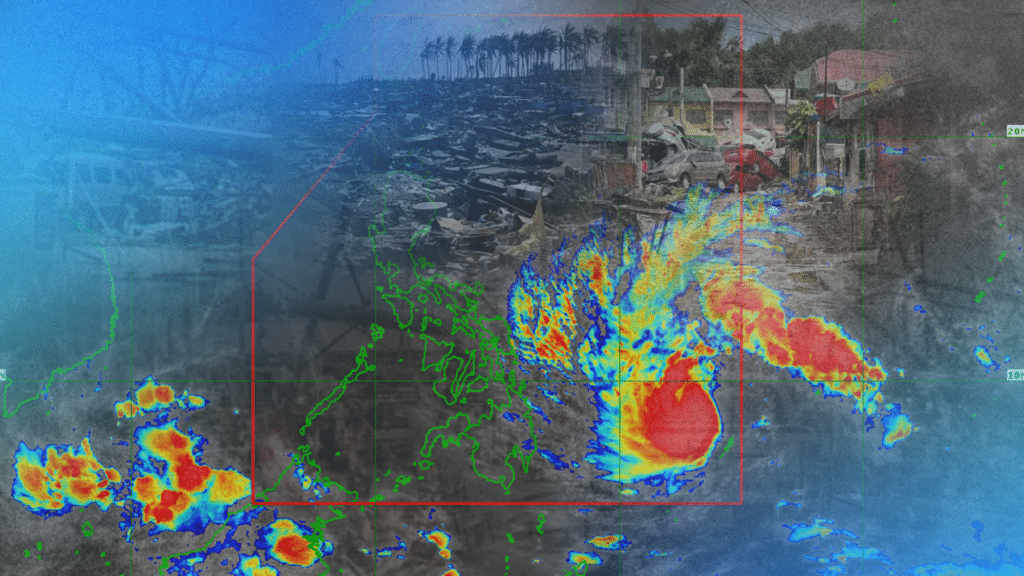
Cebu has absorbed some of the worst weather the Pacific can send, and a new review of official records shows six storms since 1951 that left deep marks on the province. The list, compiled by CDN Digital from data held by the United States Naval Research Laboratory, PAGASA, and the National Disaster Risk Reduction and Management Council, stretches from Typhoon Amy in 1951 to Typhoon Tino, which crossed the province on November 4, 2025, leaving 143 people dead and 45 missing across at least 28 local government units.
For an archipelagic nation sitting squarely in the Pacific typhoon belt, Cebu's record is a warning the whole country should read. Warm ocean waters and geography make the Philippines unusually exposed to tropical cyclones, as Worlddata's storm tracking explains, and Cebu's position in Central Visayas puts it directly in the path of systems moving in from the east.
What were the deadliest typhoons to hit Cebu?
The oldest storm on the list is Typhoon Amy, which passed through Cebu on December 10, 1951. The US Naval Research Laboratory recorded maximum winds of 240 kilometers per hour and 24-hour rainfall of 195.3 millimeters. Most buildings in Cebu City sustained heavy damage, and total damage across the province was estimated at P560 million, an enormous sum for that era. Historical records put the national death toll at 991.
Three decades later, Typhoon Nitang, known internationally as Ike, crossed Cebu on September 2, 1984, with winds of 176 kph. Its reach went far beyond the province; Nitang claimed more than 1,400 lives nationwide.
Then came Ruping, internationally named Mike, on November 13, 1990. It brought some of the strongest winds and heaviest rainfall ever recorded in Cebu, with maximum winds of 205 kph and 276.1 millimeters of rain in 24 hours. The Cebu City port saw numerous vessels sink or capsize. More dramatically, the cargo ship MV Sanko Elegance tore loose from its moorings and slammed into the Mandaue-Mactan Bridge, damaging it so badly that authorities closed it to traffic immediately.
Yolanda and Odette: the modern benchmarks
Super Typhoon Yolanda, internationally called Haiyan, passed through Cebu on November 8, 2013, with maximum sustained winds of 215 kph and gusts up to 250 kph. It made its third Philippine landfall in Daanbantayan at about 9:40 a.m. and its fourth on Bantayan Island at around 10:40 a.m. the same day. The NDRRMC counted roughly 6,300 deaths nationwide, making it the country's deadliest modern disaster.
Eight years later, Typhoon Odette, or Rai, struck on December 16, 2021, with maximum sustained winds of 175 kph and gusts reaching 240 kph. It made its seventh Philippine landfall in Carcar City at around 10 p.m., then crossed toward Negros Oriental. Odette became the second-costliest typhoon in Philippine history after Yolanda. In Cebu City alone, then-Mayor Michael Rama initially estimated damage to residential houses at P1.7 billion. Both the province and the city were placed under a state of calamity.
Typhoon Tino: the newest entry
Typhoon Tino, internationally named Kalmaegi, is the most recent storm on the list. It passed through Cebu on November 4, 2025, with maximum sustained winds of 150 kph and gusts up to 205 kph at its initial landfall in Southern Leyte.
The rainfall was the real killer. PAGASA reported that the Bagakay automatic rain gauge in Toledo City recorded 428 millimeters of rain within 24 hours, exceeding the 20-year return period and triggering widespread flooding in low-lying areas across Central Visayas.
The Cebu Provincial Disaster Risk Reduction and Management Office counted 143 dead, 5,079 injured, and 45 missing across at least 28 local government units. Those numbers place Tino among the deadliest storms in the province's recorded history.
Why does the Philippines keep taking these hits?
The answer is geography, plain and simple. The country sits in the Pacific typhoon belt, where warm waters feed storm systems that mostly arrive from the east. Some curve north toward Taiwan and China, but many make landfall on Philippine soil first, as Worlddata's analysis of recent typhoons notes.
PAGASA continues to monitor systems bearing down on the archipelago; its current bulletins track storms such as Tropical Storm Maymay, whose enhanced habagat rains triggered flooding and landslides in Luzon. The lesson from Cebu's six storms is consistent: preparation, honest local governance, and early evacuation save lives, and complacency costs them.
From Amy's P560 million in 1951 to Tino's 143 dead in 2025, the record shows both progress and failure. Buildings are stronger now, and warnings come faster. But the rainfall records keep falling, and the dead keep being counted.
Frequently asked questions
Which typhoon caused the most deaths connected to Cebu?
Super Typhoon Yolanda in 2013, with roughly 6,300 deaths reported nationwide by the NDRRMC after it made landfalls in Daanbantayan and Bantayan Island in northern Cebu.
What was the costliest typhoon in Cebu's recent history?
Odette in 2021 was the country's second-costliest typhoon after Yolanda, with initial estimates of P1.7 billion in damage to residential houses in Cebu City alone.
How much rain did Typhoon Tino drop on Cebu?
The Toledo City Bagakay rain gauge recorded 428 millimeters within 24 hours, exceeding the 20-year return period, according to PAGASA.