
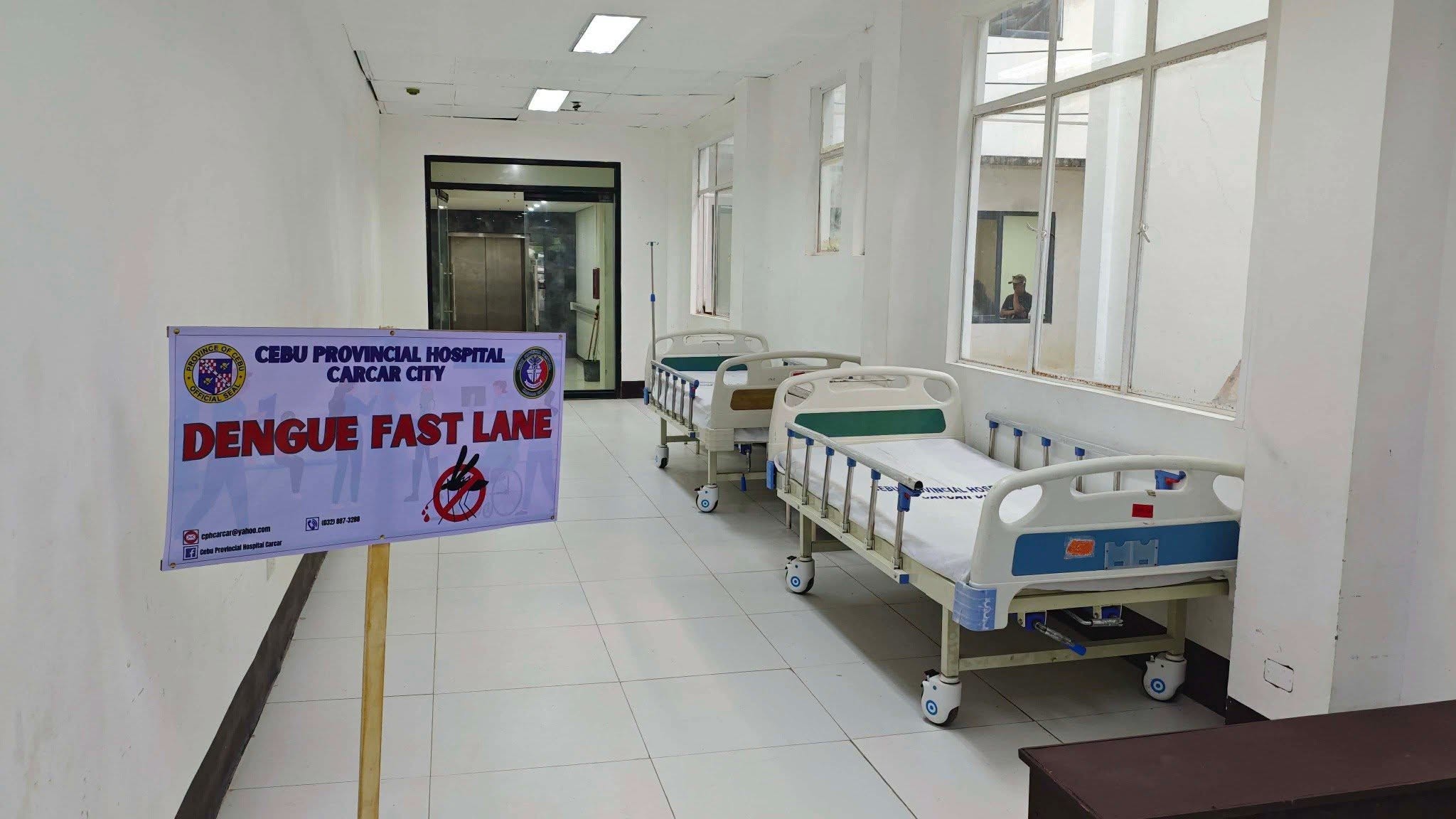
Cebu Province will not declare a dengue outbreak for now, even after recording 7,816 cases and 40 deaths from Jan. 4 to Nov. 14, 2026, the highest tally among provinces and highly urbanized cities in Central Visayas. Provincial officials said existing measures and hospital preparations are enough to handle the surge, according to CDN Digital.
Dengue fast lanes have been activated in all provincial hospitals, and the Capitol has coordinated with local government units on mosquito-control measures. Governor Pamela Baricuatro said mitigation work began as early as July, months before the latest rise in infections.
Why Cebu has not declared a dengue outbreak
Health officials in Region 7 said an outbreak is not decided by case counts alone. Dr. Ronald Jarvik Buscato, who heads the DOH-7 Communicable Disease Section, said authorities compare current cases with records from the same period over five years. An outbreak may be declared when cases exceed the expected level by at least two standard deviations.
Authorities also track mosquito populations through vector surveillance to see whether conditions point to an outbreak. Dr. Baton of DOH-7 said the agency does not set a fixed case threshold and that the decision rests with local government units under the Local Government Code, as reported by ASTIG. He said DOH-7 has not received word of plans to declare outbreaks in Cebu Province, Cebu City, Mandaue or Lapu-Lapu.
Buscato said a declaration mainly helps mobilize funding, manpower, medical supplies and extra public health interventions. Cebu has already carried out most of those steps without one.
“Cebu Province has already done [what is necessary], even without declaring an outbreak,” Buscato said in a mix of Cebuano and English.
He said a formal declaration would be needed only if authorities identified additional measures that cannot be carried out under the current response. The call stays with the provincial government and its Provincial Health Office.
Hospitals expand wards as admissions rise
Dr. Mario Joyag, officer-in-charge of the PHO, said patients are screened on arrival. Those who meet the criteria for suspected dengue are prioritized for laboratory tests and blood work. Confirmed patients may be placed in designated dengue wards where staff monitor their condition and platelet counts.
Patients who do not need admission can receive outpatient care, provided they return for regular assessments and laboratory monitoring. An initial assessment of three province-operated hospitals showed their facilities were prepared for the increase. Hospitals can expand wards, open additional beds and convert underused spaces into patient areas.
“Even if their numbers continue to increase, we will find additional spaces in our hospitals to accommodate them all,” Joyag said in Cebuano and English.
Hospitals prioritize patients by severity, with severe dengue cases receiving closer monitoring and possible intensive care. Patients needing advanced treatment may be transferred from district hospitals to higher-level provincial facilities.
The pressure is regional, not just provincial. Central Visayas logged 21,357 dengue cases and 119 deaths, with fatalities more than five times the 2025 toll, and Cebu hospitals have been reported over capacity, according to ASTIG. DOH-7 has intensified monitoring and cleanup campaigns across the region, The Daily Chronicle reported.
What residents should watch for
Buscato reminded the public that not every dengue patient needs hospital admission. Those without warning signs can be managed through rural health units, municipal health offices and other primary care facilities, subject to a doctor's assessment. Following the referral system helps prevent congestion and keeps beds for patients who need intensive treatment.
He urged residents to seek medical attention if a fever lasts 24 hours. Other possible symptoms include headache, body weakness, joint pain, persistent vomiting and abdominal pain.
Baricuatro called on communities to keep surroundings clean and eliminate places where stagnant water collects.
“The provincial government cannot do this alone. We need the help of the LGUs, and of course, each and every one of us,” she said.
The Capitol's position carries a practical edge. A declaration can unlock resources, but it can also strain hospitals and unsettle families if the response is not ready. Cebu's bet is that preparation, not a paper declaration, will keep the wards open. The coming weeks will test whether that holds as the rainy season stretches on.
Frequently asked questions
How many dengue cases and deaths has Cebu recorded in 2026?
Cebu Province recorded 7,816 dengue cases and 40 deaths from Jan. 4 to Nov. 14, 2026, the highest among provinces and highly urbanized cities in Central Visayas.
Who decides whether to declare a dengue outbreak in Cebu?
The decision rests with the provincial government and its Provincial Health Office, in coordination with local government units under the Local Government Code. DOH-7 provides technical guidance but does not set a fixed case threshold.
When should a dengue patient go to hospital?
Patients with warning signs such as persistent vomiting, abdominal pain or severe weakness should seek hospital care. Those without warning signs may be managed at rural health units or municipal health offices after a doctor's assessment.