
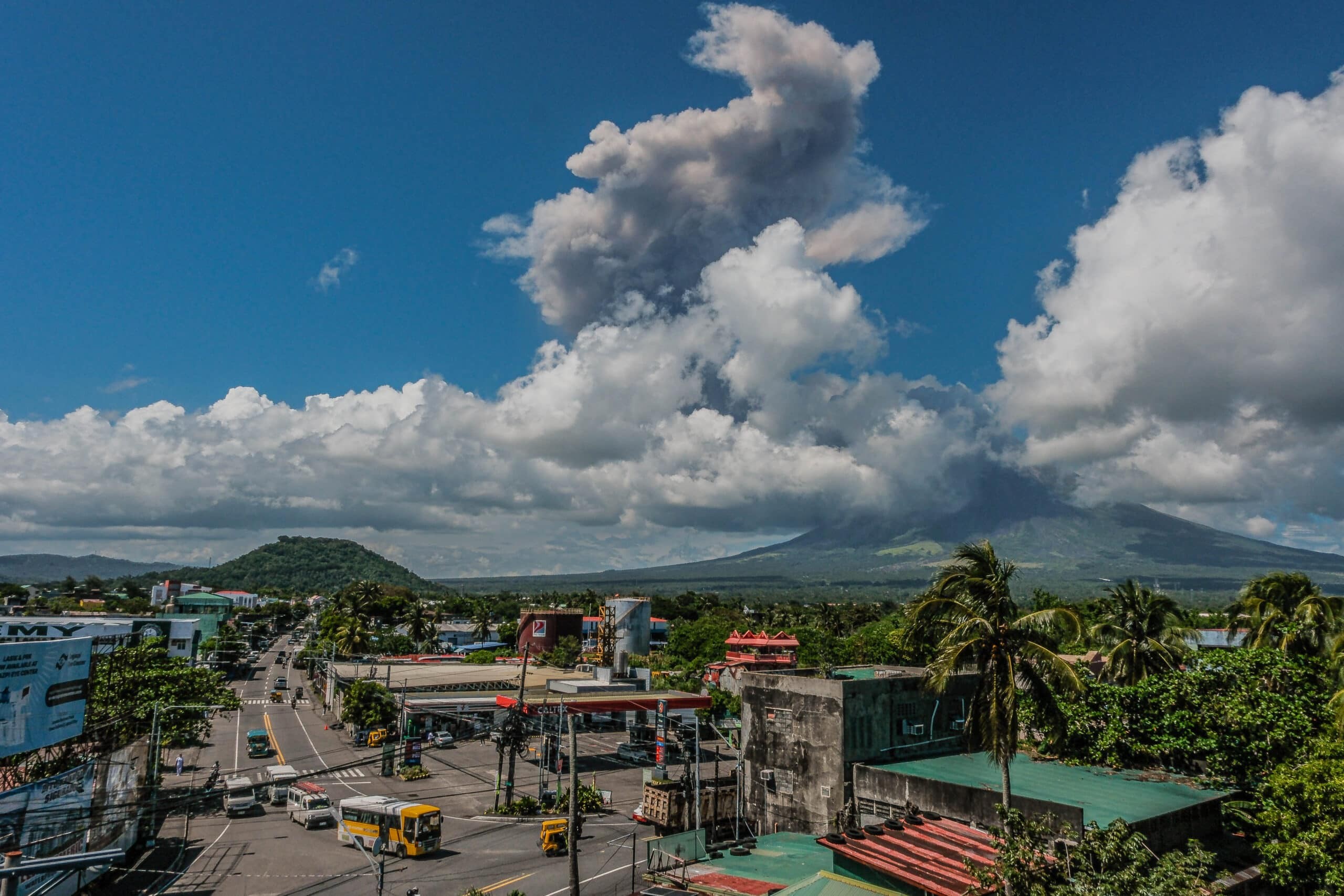
Mayon Volcano erupted explosively on Friday, October 30, blasting an ash plume three kilometers above its summit and forcing the evacuation of families living within the six-kilometer permanent danger zone in Albay.
The eruption lasted nearly six minutes, from 11:53 a.m. to 11:59 a.m., and pushed state volcanologists to raise the alert level from 2 to 3, a signal that magma is rising and that lava flows and pyroclastic density currents are possible. Authorities expect to move more than 1,100 families out of harm's way across three cities and three towns.
Families flee as ash falls on farming communities
Residents within the danger zone described the blast as sounding like a bomb. According to a report by Inquirer.net, many did not wait for a second warning and headed straight to evacuation centers after Camalig Mayor Carlos Irwin Baldo ordered them out of their communities.
Eleazar Nogot and his wife were among those who left without hesitation.
We did not hesitate to go to the evacuation center when the mayor ordered us to evacuate. We don't want to be scolded, and besides, we feel safe here.
In Camalig alone, at least 205 families had been evacuated by Friday afternoon, according to Rommel Negrete, chief of the Municipal Disaster Risk Reduction and Management Office. He said the municipal government raised a red alert status at its Emergency Operations Center and distributed face masks as trace amounts of ashfall were reported in Barangay Mayon Unit and other communities in the town proper.
By 2 p.m., 357 families had been moved out of the danger zone in Camalig and Tabaco City combined, according to figures compiled by ASTIG, with shelters being prepared for roughly the full target population identified by the province.
Race to save the rice harvest
For farmers around the volcano's slopes, the eruption set off a race against the ash. Many rushed to harvest their rice crops before fine volcanic particles could bury the fields and undo months of work and expense.
Jason Vibar, a farmer in the area, said the decision was simple arithmetic.
We just want to make sure that all our efforts in planting will not go to waste. We spent a lot on this, so it is better to save our crops.
The concern is well grounded. Phivolcs warned that moderate winds were carrying the plume west-southwest, and ashfall was later reported in parts of Guinobatan, with Daraga and nearby areas also at risk. For a region where rice farming anchors household incomes, an ash blanket over ripening paddies can wipe out an entire season.
How many families are being evacuated?
Oscar Robert Cristobal, chief of the Albay Public Safety and Emergency Management Office, said the province expects to evacuate 1,131 families from Tabaco City, Ligao City and the towns of Guinobatan, Camalig, Daraga and Malilipot, particularly in areas inside the permanent danger zone. The Daily Tribune reported that local governments across Albay ordered the evacuations immediately after the eruption, while GMA News Online confirmed that Tabaco City enforced a mandatory evacuation for its residents.
The scale is familiar to Albay, which has lived with Mayon's temper for generations, but each episode tests the province's preparedness anew. The swift red alert in Camalig and the early distribution of face masks suggest local disaster offices have learned the hard lessons of past eruptions, including the deadly 2018 episode that displaced tens of thousands.
What Phivolcs is watching for
Antonia Bornas, chief of the Volcano Monitoring and Eruption Prediction Division of the Philippine Institute of Volcanology and Seismology, said Mayon continued to emit high levels of sulfur dioxide, indicating magma beneath the volcano. Before Friday's blast, instruments recorded 101 volcanic earthquakes, including 18 tremors lasting up to eight minutes, while sulfur dioxide emission was measured at 1,413 metric tons per day.
Bornas warned that more explosive eruptions could occur because monitoring parameters remain elevated. She explained that sustained gas emissions could mean the volcano's conduits have become obstructed, allowing pressure to build beneath the surface and potentially trigger further explosive activity.
She also noted a detail that matters for residents watching the plume's color. Explosive eruptions produce finer volcanic material than lava flows or Strombolian activity, and those finer particles have different optical properties, which is why the ash plume appeared lighter in color.
Whether Friday's eruption was an isolated event or the first of a series remains uncertain, Bornas said.
What happens next
Alert level 3 means the danger is not over. Phivolcs has warned of possible lava flows and hazardous pyroclastic density currents, and evacuation operations are continuing across the six affected localities. Residents outside the danger zone but downwind of the plume, especially in Daraga, Guinobatan and nearby barangays, are advised to wear masks and protect water sources from ash contamination.
For thousands of Albayanos in evacuation centers, the coming days will decide whether the harvest was saved in time and whether Mayon has finished speaking or is only clearing its throat.
FAQ
When did Mayon Volcano erupt?
Mayon erupted explosively at 11:53 a.m. on Friday, October 30, 2026. The eruption lasted nearly six minutes, ending at 11:59 a.m.
What is Mayon's current alert level?
Phivolcs raised Mayon's alert status from level 2 to level 3 after the eruption, indicating increased magmatic activity and the possibility of lava flows and pyroclastic density currents.
How far did the ash plume reach?
The eruption sent an ash plume three kilometers above the summit. Winds carried it west-southwest, and ashfall was reported in parts of Guinobatan, with Daraga and nearby areas also at risk.
How many families are being evacuated?
Albay authorities expect to evacuate 1,131 families from Tabaco City, Ligao City, Guinobatan, Camalig, Daraga and Malilipot. At least 357 families had left the danger zone by 2 p.m. on Friday.