
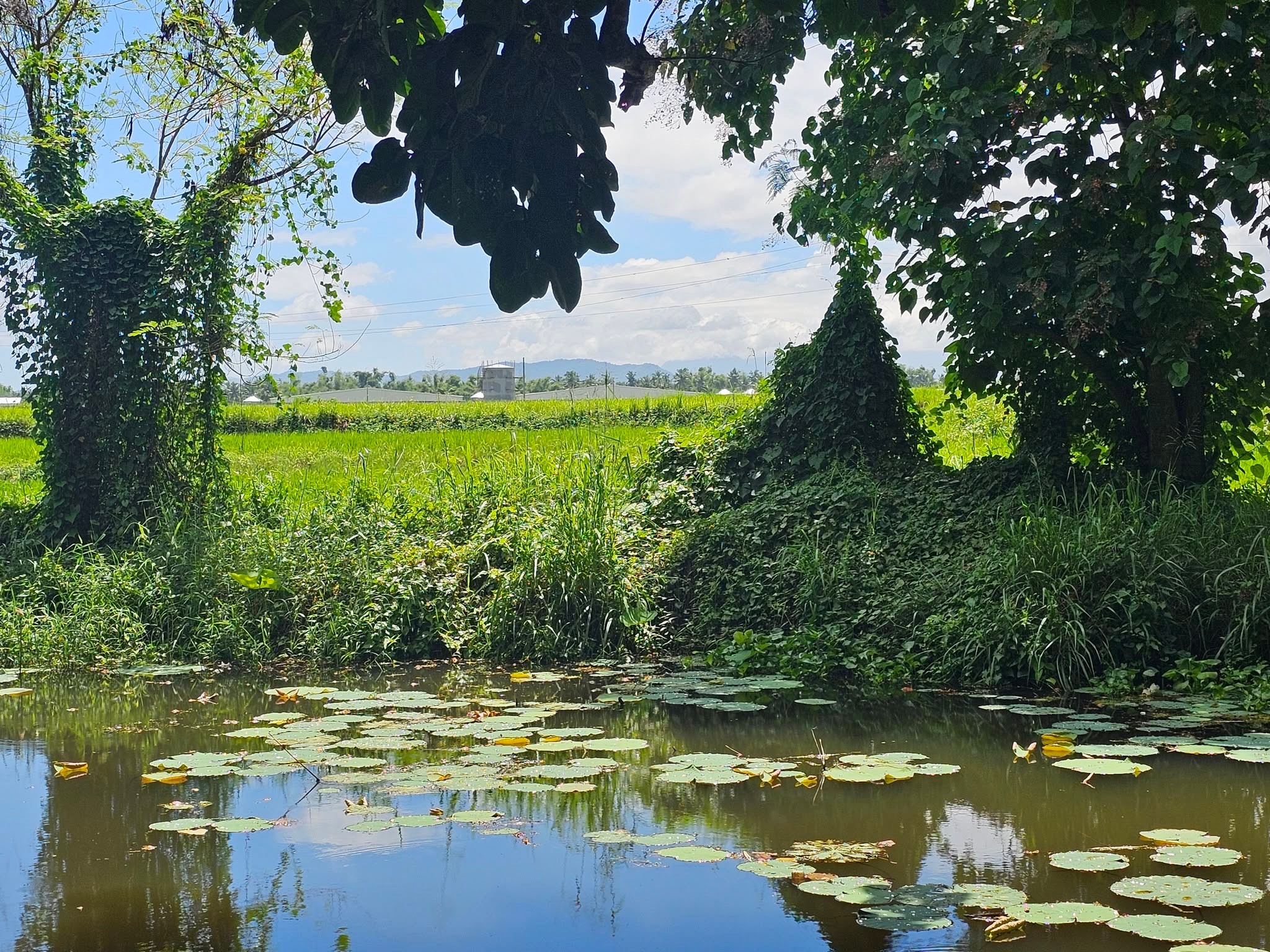
Residents near a 50,000-hog piggery in San Antonio, Quezon, are demanding firm answers about water safety, lost farmland and government accountability as the project advances, Rappler reported on November 20.
The 12-hectare Mighty Livestock Farms development in Barangay Callejon sits close to irrigation channels, rice fields and homes that draw drinking water from hand pumps. For families nearby, the dispute now reaches beyond land conversion. They want to know whether the waste system can carry the load and which agency will act if it fails.
A daily waste load beside rice fields
Emma Alday, a resident in her eighties whose farm is about 250 meters from the site, estimates that each hog could produce five kilograms of waste a day. At full capacity, that would mean 250,000 kilograms, or 250 metric tons, daily, according to her calculation.
“Our water will definitely be affected, even if they say the facility is modern,” Alday said. She also raised concerns about air quality and flies, adding that residents would learn the full effects only when operations begin.
Former construction worker Arnel Las said the irrigation channel serving local rice fields runs beside the piggery. He alleged that a roughly 20-meter lagoon has bare earth rather than concrete flooring, allowing water to move toward the fields.
“The water we drink comes from a hand pump, so we will also be affected,” Las said.
Las identified San Juan, San Francisco, Behia, Callejon, Sinturisan and Briones as communities that could be exposed because their irrigation waterways are connected. Residents want the Department of Environment and Natural Resources-Environmental Management Bureau, or DENR-EMB, to explain whether wastewater could enter the soil and groundwater, and whether treatment facilities can handle the expected volume.
What the environmental permit covers
The EMB issued an Environmental Compliance Certificate on October 24, 2023. It covers 113,973 square meters and describes a livestock farm with a maximum stocking capacity of 50,000 hogs at any one time.
An ECC sets conditions and commitments for a project. It is not a guarantee that the development will cause no environmental harm. That distinction matters in San Antonio: paper compliance must still be matched by inspection, accessible monitoring and prompt enforcement.
San Antonio’s municipal government said Mighty Livestock Farms had submitted the required documents. Sangguniang Bayan Secretary Carlo Katigbak said the local government could act once noncompliance was established.
“The local government is strict on these matters, especially when they involve the environment,” Katigbak said, adding that sanctions could include revocation of the company’s license to operate or business permit.
Those assurances have not settled the central question for residents: who will test the water, publish the findings and respond before damage reaches farms and household wells?
From rice fields to construction, then joblessness
The project also changed the working lives of former rice farmhands. Las said residents were first told that a feed mill would rise on the property. By the time construction was underway, he said, it was a piggery.
Las worked at the site for nearly two years before he and others were dismissed without explanation, he said. Some benefits, including 13th-month pay, remained unsettled when he was interviewed.
“We reported the matter to the San Antonio Mayor’s Office in September,” Las said. “We were told they would call us, but no one has contacted us to this day.”
Another former worker, Kenneth Ocampo, said 16 workers lost their jobs after the company cited financial constraints and a need to reduce its workforce. He said they later heard that new workers were being hired, despite an earlier promise to prioritize local residents.
“Maybe we did something wrong, but they shouldn’t have just dismissed us without explanation,” Ocampo said. “They should have talked to us and told us why.”
Ocampo now depends on occasional work. His account gives the land dispute a sharper local edge: families that once earned from rice production say they gained temporary construction jobs, then lost those as well.
A petition to Marcos, then a paper trail
Alday and other residents began organizing against the project about three years ago. They gathered around 300 signatures in San Antonio and neighboring Tiaong and sent a petition to President Ferdinand Marcos Jr. dated November 28, 2024.
The petition’s message was plain: “Our staple food is rice.” It warned about the continuing loss of rice fields.
The appeal reached the national government. A January 27, 2025 memorandum signed by DAR-Calabarzon Director Cupido Gerry Asuncion recorded its referral from the Presidential Action Center through the Department of Agrarian Reform’s central office to its Quezon provincial office. The provincial office was directed to answer Alday and report any action taken.
Alday said no satisfactory answer followed. She recalled being told by DAR personnel that their workload had kept them from attending to the matter.
She also sought help from the EMB office in Lucena. Personnel visited the site and inspected the biogas and lagoon facilities, but Alday said the office only investigated and reported to the regional office.
Rappler said it contacted DENR-EMB IVA, the National Irrigation Administration in Quezon, DAR Quezon and Mighty Livestock Farms by email or phone, then followed up several times. More than two weeks after the initial inquiries, none had answered the questions or allegations, according to the report.
Food production needs public trust
The dispute comes as the national government works to rebuild hog production after African swine fever. Agnavigator reported that nearly 500,000 pigs had been vaccinated and that biosecurity measures were being implemented in Quezon, among other provinces.
Expanding supply and protecting rice-growing communities need not be competing goals. Both depend on rules that farmers can see being enforced. For San Antonio, that means clear baseline water data, regular inspections, a public complaints channel and a timely accounting of the workers’ claims.
Alday has spent two years writing letters and visiting offices from the municipal level to the Office of the President. Her unanswered questions remain specific: how irrigated rice land made way for the piggery, whether nearby communities were properly consulted, and whether the waste system will protect the water beneath and around their farms.