
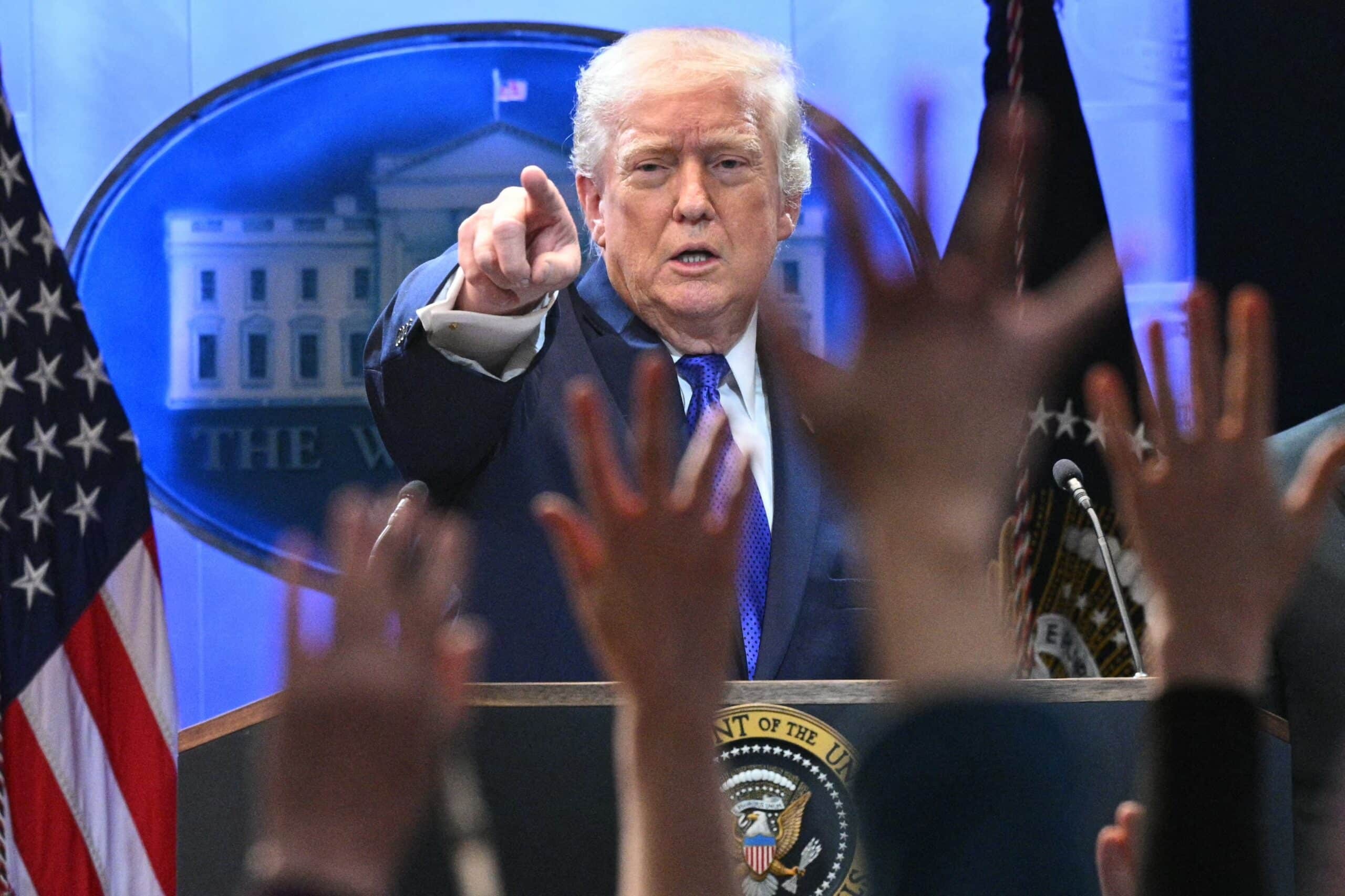
Wall Street stocks surged on Wednesday, November 4, as markets welcomed a clear result from the United States midterm elections, while crude oil tumbled more than eight percent on expectations that a Democratic sweep of Congress could hasten an end to the US-Iran war.
The Dow Jones Industrial Average closed up 3.0 percent, gaining more than 1,500 points to finish at 53,356.12, according to Inquirer's market report. The S&P 500 rose 1.6 percent to 7,688.62 and the Nasdaq Composite added 1.4 percent to close at 25,736.51.
What the Democratic sweep means for Washington
Democrats seized control of both houses of Congress, handing them the power to block legislation, open investigations into President Donald Trump's administration and shape government budgets, including at the Pentagon. The defeat of Trump's Republican Party was decisive enough that the president did not contest the results, a point that analysts said removed a layer of uncertainty hanging over markets.
US Vice President JD Vance said in a social media post that the Republican defeat reflected public anger over the Iran war, which has driven up the prices of fuel and other staples for ordinary households.
Why oil prices fell sharply
Both major crude contracts finished the day below $100 a barrel. Brent North Sea crude dropped 8.7 percent to $94.62, while West Texas Intermediate fell 8.3 percent to $88.12.
“I think that the election might be leading the market to conclude that Trump might now be inclined to make a deal,” said Andy Lipow of Lipow Oil Associates. “Also, with the Democrats in charge of the Senate and House, they may be inclined to restrict funding for the war, and that forces Trump into ending the conflict.”
For a country like ours that imports most of its fuel, cheaper crude is welcome news. Every dollar knocked off a barrel of oil eventually eases pressure on pump prices, jeepney fares and the cost of rice moved from province to market. Filipino families have been bearing the weight of global energy shocks for years now, and a war-driven spike in fuel costs is the last thing our commuters and tricycle drivers need.
AP News reported that stocks rallied and crude prices fell sharply after American voters delivered what the wire called a rout to Trump's Republican Party.
Winners and losers on trading floors
Not every stock joined the party. Both of Elon Musk's publicly traded companies fell after the billionaire's huge political spending failed to hold back the Democratic tide. SpaceX slipped 3.8 percent and Tesla dropped 3.3 percent.
Defense contractor Lockheed Martin retreated 6.9 percent, a sign that investors see fewer Pentagon dollars flowing if Democrats control the purse strings. Chipmakers such as Nvidia also declined.
But Microsoft, Amazon and other data center giants rose. Steve Sosnick of Interactive Brokers said the gains suggest markets see an upside to constraints that deter overbuilding of artificial intelligence infrastructure, an issue that fueled campaigns in states like Texas, Georgia and Ohio, where Democrats won governorships previously held by Republicans.
“At some level, people are happy that the industry might be saved from its own worst instincts,” Sosnick said.
First Solar jumped 4.6 percent as the election lifted prospects for renewable energy, a shift worth watching for the Philippines as we weigh our own energy mix against rising demand.
Europe and Asia also moved higher
European markets finished with gains of around two percent even as official data showed eurozone inflation reached a three-year high of 4.0 percent in October. London's FTSE 100 rose 1.8 percent, Paris's CAC 40 gained 2.0 percent and Frankfurt's DAX climbed 2.2 percent.
CNA noted that markets greeted the resolution of the midterms on Wednesday. Asia performed strongly too, with Hong Kong's Hang Seng up 1.7 percent and Shanghai's Composite up 2.2 percent, though Tokyo's Nikkei 225 closed 1.4 percent lower as its tech sector struggled.
The euro strengthened to $1.1229 from $1.1193, while the dollar slipped slightly against the yen to 158.49.
Why this matters for the Philippines
A US Congress in Democratic hands will likely push harder for diplomacy over escalation, and Washington's willingness to end the Iran conflict would ripple straight through to our shores. Lower oil means a narrower trade deficit, calmer inflation and breathing room for the Bangko Sentral as it weighs interest rates.
Our economy is tied to the health of America's, from remittances sent home by overseas Filipino workers to the call centers and exporters who depend on Western demand. A Washington that governs with predictability, whatever party holds the majority, is good for Filipino workers and families.
The Los Angeles Times reported that the rally came after Trump's party lost its sole control of Washington, a shift that investors initially feared but ultimately embraced.
The next test comes when the new Congress convenes and takes up the budget, where the first signs of whether war funding actually shrinks will appear.
FAQ
How much did the Dow rise after the US midterm elections?
The Dow Jones Industrial Average closed up 3.0 percent on Wednesday, November 4, gaining more than 1,500 points to finish at 53,356.12.
Why did oil prices fall after the midterms?
Crude dropped more than eight percent on expectations that the Democratic Congress would restrict funding for the US-Iran war, pressuring President Trump toward ending the conflict.
How does cheaper oil affect the Philippines?
The Philippines imports most of its fuel, so lower crude prices tend to ease pump prices, transport fares and the cost of goods, while also helping contain inflation.